7 September 2016

Conserving the Medicinal plants

One-sixth of Indian plants have medicinal attributes but the threat of extinction looms large. The anti-fatigue property of Trichopus zeylanicustraditionally used by Kani tribes of Western Ghats in Kerala is an accepted fact discovered per chance by Council of Scientific and Industrial Research team during a forest expedition. Plant-derived compounds hold source of several clinically useful anti-cancer agents like vinblastine, vincristine and the chemical paclitaxel. Taking cognizance of healing properties of plants, this year AYUSH Ministry of the Government of India and the Department of Health & Human Services of the Government of USA along with National Institute of Health (US) and National Cancer Institute (US) conducted a workshop on fighting cancer with traditional medicine.
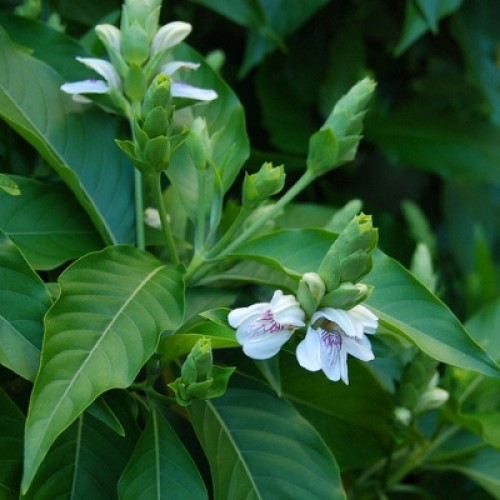
plantsguru-medicinal-plants-adulsa-500x500
India has over 50,000 herbal formulations attributed under traditional knowledge falling under the ambit of Ayurveda, Unani, Siddha and Tibetan medicine and folk tradition. 960 medicinal aromatic plants are used by the contemporary trade and Ayurvedic industry and 178 species of them are consumed in volumes exceeding 100 metric tonnes per year and these constitute about 80% of the total industrial demand of all botanicals in the country. This dire need for medicines leads to rampant and over cultivation of plant parts leading to rare, endangered, critical and extinct state. It has been estimated by World Health Organization, WHO that 70 to 80 percent people worldwide resort to traditional, largely herbal medicine to meet their primary health-care needs. The global market potential is pegged at US$ 62 million but sadly India has less than 0.5% share. However, after China, India is the largest exporter of medicinal plants and herbal products. This is a result of export without proper certification that fetches low returns.
The Indian chapter of World Wildlife Fund TRAFFIC has deliberated over standards and certification schemes in medicinal and aromatic plants in India.tea_leaves
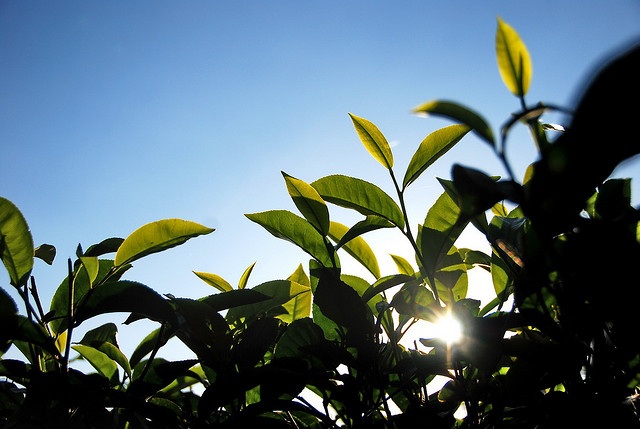
India has about 45,000 plant species and over a sixth of them standing at 7,333 are medicinal aromatic plants. But only 15% of medicinal plants are cultivated while the remaining 85% are collected by the industry from forest ecosystems and other natural habitats. Dr S K Niraj, spearheading TRAFFIC is apprehensive of the glaring threat of mass extinction of 3000 medicinal plants of India in the face of escalating commercial demand.
Dr M K Sarkar, former Additional Principal Chief Conservator of Forests, Tamil Nadu Forest Department has been working on bio-governance for endemic and threatened plants in India. According to Dr Sarkar In the last 10 years, several Indian plants have gone extinct.  It is estimated that more than 1200 plants that are exclusively found in India suffer from various degrees of threats. Again, 3471 species found in the Himalayas, 2015 species found in Peninsular India and 239 species in the Andaman and Nicobar Islands are under serious threats of extinction.’  The Biological Diversity Act, 2002 states that the Central Government is empowered to notify any species as threatened and make regulation on it. Forests being in the concurrent list, the central government can only give guidelines to the state. The state government has to make the implementation of their policies.
Dr. Sarkar corroborates, ‘Only 6 medicinal plants are covered under Indian Wildlife Protection Act of 1972 and remains so even after 44 years, till date. Wildlife Protection Act is stringent enough to protect animal species but covers only 6 plants. Forest Conservation Act of 1980 and 1988 harps only on habitat protection. Instead of negative listing and putting a ban on the use of these medicinal plants, they should be grown more and more. Banning leads to discouragement in the industry and less production and it gets more endangered owing to more illegal trade that can’t be stopped.’
‘70% of the medicinal plants are harvested in destructive way.’ asserts M.K.Ranjeet Singh, former forest secretary with Madhya Pradesh and also instrumental in framing of the India Wildlife Protection Act of 1972. Good Agricultural and Collection Practices for Medicinal Plants (GACP) are a set of guidelines developed by the World Health Organisation (WHO) aimed at improving the quality of medicinal plant material being used in the herbal medicines in the market. Dr S K Niraj, cautions, ‘If medicinal plants are not cultivated in a suitable environment, if they are harvested at the wrong time of the year or if they are processed incorrectly, the potency of the medical properties may be reduced, leading to the manufacture of ineffective herbal medicines’. Good Agricultural Practices (GAP) and Good Field Collection Practices (GFCP) lay down the main principles that should be followed by farmers and collectors to ensure they are producing medicinal plant materials with maximum levels of active ingredients.
Tribal population can derive thriving income from the cultivation of medicinal plants done on scientific lines to enable storage. The government has been offering them minimum support price to ensure tribal population to feel safe. S.S. Maity, deputy general manager with Tribal Cooperative Marketing Development Federation of India Ltd, under Ministry of Tribal Affairs says, ‘Around 35% of the income of tribal comes from medicinal plants. We have been teaching them ways of storage and processing into various items on scientific lines. TRIFED have been offering them minimum support price for 12 products.’
Ravi Singh, Secretary General and CEO with World Wildlife Federation, India points out, ‘India has just 22 certified medicinal plants whereas China has 200. I’ve spoken to people in Panna and Bundelkhand.  They are unable to export medicinal plants owing to absence of certification.’ All medicinal plants exclusively found in India are teetering on extinction in the coming years if stringent contingency plan doesn’t get implemented.
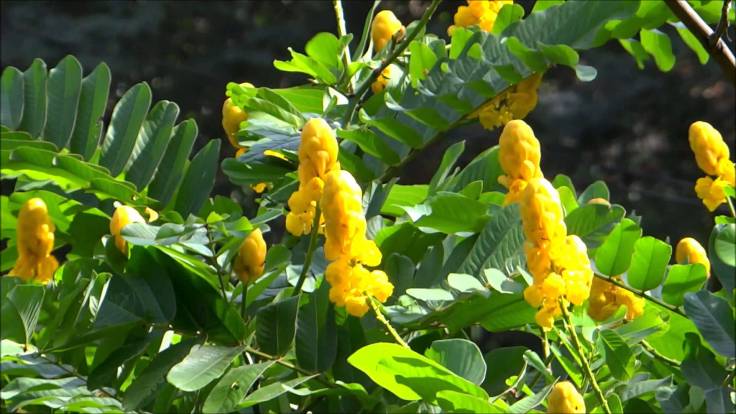
The National Medicinal Plants Board (NMPB) under Ministry of AYUSH is implementing Central Sector Scheme, conservation of medicinal plants carried out mainly through in-situ conservation by way of plantation augmentation of species in their natural habitat and establishing Medicinal Plants Conservation and Development Areas (MPCDAs) through ex-situ conservation by developing herbal gardens.maxresdefault-1
*The Author is a senior journalist and a radio documentary maker.
Some critically endangered species found only in India-
Picture 1.i201683001

Red sanders is highly endemic to Andhra Pradesh and extreme north areas of Tamil Nadu. Baba Ramdev’s Patanjali Yogpeeth in Haridwar purchased 706 metric tonnes of red sanders wood in a single government auction held last year.   [Pic credit: Rawa Medherbs]
Picture 2.

i201683009
Critically endangered Beddome’s cycas is endemic to Andhra Pradesh only is highly sought for Ayurvedic medicine.    [Pic credit: Dr ABD Selvam, Botanical Survey of India]
Picture 3.

The Himalayan Yew occurs only in North East India, sought for Ayurveda and Tibetan medicine.   [Pic credit: Dr ABD Selvam, Botanical Survey of India]
Picture 4.
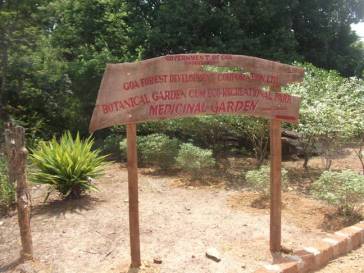
Botanical Garden cum Recreational Park at Salaulim, Goa bordering Karnataka is located at the foothills of the Western Ghats along with the Salaulim Dam. It is flanked by Netravali Wildlife Sanctuary. This eco-trail of 33 kms from Madgaon is worth passes through idyllic hamlets and forests with excellent road conditions and very thin traffic. A full-fledged medicinal garden is coming up here

Improving the quality of School Education

Improving the quality of School Education


The 21st Century global economy can thrive in an environment that has focus on skills around creativity and imagination, critical thinking and problem solving. Empirical analysis reveals a strong positive relationship between education and economic growth. India has a large population of 30.5 crore (Census 2011), in the school going age of 6-18, which is more than 25% of the total population. India has the full potential to use this demographic dividend to its advantage if the children can be imparted education that prepares them to face the real world with confidence.
With the adoption of Sustainable Development Goal 2030 the focus now has shifted to Quality with Equity up to the Secondary level of Education.
Prime Minister Shri Narendra Modi, some months back, in one of his addresses through Mann Ki Baat emphasized the importance of quality in the following words: “So far, the government’s focus was on spreading education across the country. But the time has now come to shift the focus on quality education. Now, the government should emphasise more on learning rather than schooling,”
HRD Minister Shri Prakash Javedkar also announced that “Raising the quality of education in the country will be the top priority”. This shift from schooling to learning would mean a shift in focus from inputs to outcomes.
ssa
Sarva Shiksha Abhiyan (SSA), a Centrally Sponsored Scheme implemented by Government of India in partnership with State Governments, has achieved considerable success in universalising elementary education. Today, there are 19.67 crore children enrolled in 14.5 lakh elementary schools in the country. The dropout rate has reduced considerably, but is still high at 16% at primary and 32% at upper primary level, and needs to be reduced significantly. As per a survey, the number of out of school children has declined from 135 lakh in 2005 to 61 lakh children in 2014, all efforts must be made to bring the last child back to school.
As is evident, India has done well in terms of ensuring access and equity in schooling. However, the level of learning by the average student is a matter of concern. As per the recent report of the National Achievement Survey (NAS) for class 5 students, the percentage of students getting more than half the questions correct is only 36% for reading comprehension and the corresponding figures for mathematics and environmental studies are 37% and 46% respectively.
Both the Centre and the State Governments are devising comprehensive approaches and strategies to address the issue of improving quality of education in schools. Some of the key focus areas include working on issues related to Teachers, Classroom processes, Assessments and Evaluations of student’s learning, School Infrastructure, School Effectiveness and Community participation.
1.Teachers
While children are at the centre of school education, it is the teacher who plays the most critical role in ensuring learning among children. Since inception of Sarva Shiksha Abhiyan 19.48 lakh additional teacher posts have been created for elementary classes; appointment of teachers against these posts has resulted in improving the pupil teacher ratio from 42:1 to 24:1. However, there are still schools having single teachers or inadequate number of teachers. For this State governments need to redeploy teachers for equitable distribution and also have an annual schedule of recruitment of qualified teachers, so as to replace the retiring teachers.
prashikshak
Presently 85% of regular teachers in government schools are professionally qualified. In 20 States and UTs, all teachers have the requisite qualifications.  Government is taking steps to ensure that over the next 2-3 years all teachers in the remaining 16 States/UTs would be fully qualified.
As per the findings of a study done in 2013 by the Ministry, the average teacher attendance was found to be around 83%.  This needs to be improved to close to 100%.
ssa-51
Need based professional development of teachers working in schools is being taken up under both Sarva Shiksha Abhiyan and Rashtriya Madhyamik Shiksha Abhiyan schemes. Online programmes are also on the anvil to supplement the efforts.
The school system needs to attract bright students to the teaching profession, 4-year integrated B.A B.Ed and B.Sc B.Ed teacher programmes have been introduced by the National Council of Teacher Education and these programmes need to be popularized to catch the attention of those who are genuinely interested in nation building through a quality schooling system.
2.Classroom Processes
These have the strongest association with learning achievement of children, and include classroom management, effective student teacher interactions, and quality of instruction; structured teaching and nature of activities focussing on learning. Ensuring regular attendance of students as well as teachers in the classroom is a pre-condition for the same. The model for improving learning outcomes needs to focus on clearly bench marking expected learning outcomes for every class and every subject, easily understandable by teachers, school heads and widely disseminated among parents and community; ICT enabled teaching and learning.ict
Recognizing the need for a strong foundation for learning the Government launched Padhe Bharat Badhe Bharat in 2014, with a framework emphasising the importance of learning to read with understanding. In order to build an interest and popularizing learning of Mathematics, Science and Technology this government launched the Rashtriya Avishkar Abhiyan in 2015.
rashtriya-avishkar-abhiyan1
Through this initiative schools have an opportunity to be mentored by institutions like the IITs and NITs amongst others.  The recent launch of Atal Innovation Mission  and  Atal Tinkering Lab would give a fillip to critical analysis, creativity and problem solving among students.
Atal-Innovation-Lab-1
All the Government Secondary schools in the country are being ICT enabled so as to leverage ICT in teaching the children and also for improving IT literacy among them. The National Repository of Open Educational Resources (NROER) and recently launched E-Pathshala are bringing together all digital and digitisable resources across all stages of school education and teacher education.
3. Evaluation and Assessment
Assessing the learning progress of a student is one of the primary roles of a teacher. Regular and continuous assessments of students in the classroom are meant to provide, feedback to the child and parents, feedback to the teacher, remediation for addressing the learning deficit among children. A robust classroom based learning assessment mechanism can ensure that both the teacher and the student are focussed on learning.evaluation
What gets measured can be improved. Along with the classroom based assessment of learning, large scale achievement surveys are needed to look at how students are progressing in their learning as well as how the system is performing as a whole to achieving the goal of education.
Government has initiated a process whereby, every year, children will be assessed through a National Achievement Survey. This will cover students in government schools, government aided schools and private schools. The primary purpose of the survey is to provide schools an opportunity to understand their student’s performance against the bench marked learning goals. Based on the results, schools will develop a school level plan to improve the learning levels. Such a survey will create a positive environment focussed towards improving learning outcomes. The feedback for the teachers and students will be immediate so that they can take timely action to address the learning gaps; track the performance of students over the period of time and provide systemic feedback to curriculum developers, teacher training institutions and educational administrators about the health of educational system. This is essential for educational quality improvement.
4. School Effectiveness
For schools to perform effectively, empowerment of the school head is crucial. Government of India has suggested State Governments to take steps to develop a separate cadre of school headmasters. With a full time head teacher in place capacity building can be done in a targeted manner. In order to nurture the leaders for the schools of tomorrow, the National Centre for School Leadership at NUEPA has developed a training package, which is currently being implemented across the country. Plans are afoot to set up Leadership Academies in States that would be able to meet their State needs.
Schools need to be continuously assessed in various dimensions so that the need for improvement is internalizedInitiatives like Gunotsav in Gujaratgunotsav
Pratibha Parv in Madhya Pradesh,ppmainSambalan in Rajasthan and Samiksha in Odisha are good examples. Comprehensive school assessment framework called Shala Siddhi has been developed at the national level by NUEPA and launched in November 2016. This has a component of self-assessment and a third party assessment. The self -assessment will be used by schools to develop and implement their improvement plan.
Steps are being taken to have Aadhar enabled data of students and teachers. This would help track children from one class to the next, thereby enabling the system to identify children who drop out; ensuring that all eligible children are receiving the entitlements such as mid-day meal, textbooks, uniforms and scholarships as well as monitoring student and teacher attendance.
5. School Infrastructure
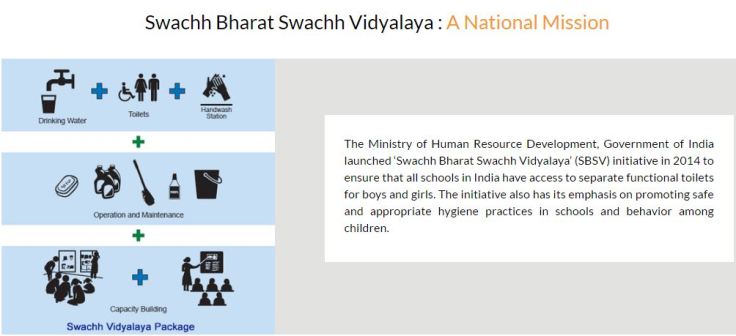
Through the interventions under Sarva Shiksha Abhiyan and Rashtriya Madhymik Shiksha Abhiyan major strides have been taken in provisioning of school infrastructure. Since inception of SSA, school buildings have been added for 2.23 lakh primary and nearly 4 lakh upper primary schools. States, UTs, Central PSUs and private corporate sector responded to the call of the Prime Minister to have a separate functional toilet for girls and boys in every school.  Under the Swachh Vidyalaya initiative 4.17 lakh toilets have been constructed. Steps are being taken towards ensuring that the toilets are kept clean, functional and well maintained.6565
Today we are looking at schools to be more than just buildings and classrooms. For a school to have basic learning conditions it must have electricity, functional library and reading corners; science labs; computer labs, toilets and LPG connection for cooking of mid-day meal. All States and UTs have been advised to ensure electricity in all Secondary Schools in the current year itself while the remaining schools may be covered within a short time frame.
6. Community Involvement
In such a large and diverse country the key to success is decentralization of decision making and accountability. In case of school educationcommunities play a vital role in school management through the School Management Committees. So far these committees have been involved in provisioning of inputs like construction of school building etc. Moving ahead the School Management Committees will need to be strengthened to hold the school accountable for their children’s learning. Parents and SMC members will need to be aware of the class wise learning goals; efforts like SMC meetings, social audits or gram sabha meetings on school education would need to assess student learning. In order to ensure that moving forward parents and community members can hold schools accountable for their child’s learning, efforts are on to prepare class wise learning goals in easy to understand language and the plan is to display these in the school and also do a wide dissemination.
On the eve of the passage of the nation to the 70th year of Independence, we must commit ourselves to a positive campaign for improving the quality of school education. This campaign will need the efforts of one and all – government, civil society organisations, experts, parents, community members and children. It is time that a Team India is built around this issue of improving Quality of School Education so as to build a solid foundation for the next generation to enable them to face the 21st Century with confidence.

2 September 2016

Indian Ocean Conference in Singapore Today

Indian Ocean Conference in Singapore Today


His Excellency Mr. Ranil Wickremesinghe (Hon’ble Prime Minister of Sri Lanka), Dr. Vivian Balakrishnan (Hon’ble Foreign Minister of Singapore), Shri M J Akbar (Hon’ble Minister of State for Foreign Affairs, India and my colleague in the Council of Ministers) and other dignitaries present in the audience from over 30 countries, Namaskar! I extend my best wishes to all of you on behalf of the Government of India.

At the outset, I wish to thank the organizers of this timely conference- India Foundation, S. Rajaratnam School of International Studies (RSIS), Singapore; Bangladesh Institute of International and Strategic Studies (BIISS) and Institute of Policy Studies (IPS), Sri Lanka- for inviting me to be a part of this event.

With a coastline of 7500 km and 1200 island territories, India is and always has been a maritime nation. Our central location in the IOR (Indian Ocean Region) has connected us with other cultures, shaped our maritime trade routes and influenced India’s strategic thought.

For example, Lothal in Gujarat was one of the earliest seaports in the world and our ancient Sanskrit texts refer to oceans as the storehouse of Chaturdashanam Ratnanam: the 14 gems. 90% of India’s trade by volume and 90% of our oil imports are carried on the seas. India has also been a net provider of security and force for stability in the region. These three pillars of Culture, Commerce and Comity are also the central themes of this conference.

We live in a world where the strategic and economic pivots are shifting to make the Indo-Pacific generally and the IOR more specifically the centre stage of virtually every major power. However, while the attention of other countries on IOR is fairly recent, India has maintained trade and civilizational links with other countries in the region since time immemorial. These links were developed without recourse to military conquest, instead by people-to-people engagements.

For example, merchants and artisans who settled in these regions over millennia brought with them their cultural ethos and traditions. The host societies throughout the region accepted these visitors as their own and in turn, the fusion that arose saw the creation of amazing shared cultures that we can all be proud of, not bound by political boundaries or the monopoly of any single nation. Diversity and pluralism developed according to local genius over time.

There was considerable to-and-fro movement, so much so, that we are informed by the author and researcher Sanjeev Sanyal in his latest book, “The Ocean of Churn’’, that there was a period in the history of Tamil Nadu when the Pallava dynasty had succession problems. So they invited a prince from Cambodia to take-over their kingdom, reciprocating the gesture of an earlier Pallava prince who had gone to Cambodia, married a local Naga princess and established a dynasty.
This was the extent of acceptance and familiarity across geographical distances that we can only wonder about. The result was the emergence of extensive trading networks that led to economic prosperity and made our region attractive to outside powers that had less benign intentions.

The result was the unfortunate disruption of our links as imperial powers established their colonies and shifted the focus of our economies, our trading patterns and even our cultural discourse, away from each other to one directed towards the colonial powers. Our mutually beneficial economic and cultural networks got so extensively disrupted that they could not be fully re-established even after our countries got independence.

This needs to change so that countries of the region can become the masters of their fate once again, not dictated by superior military powers from outside. Rather we should strive to develop peace and harmony amongst all stakeholders based on rules that we have drawn up ourselves.

Hon’ble Prime Minister of India Shri Narendra Modi says that Blue Chakra of India’s national flag represents the potential of the Blue Economy and my Ministry is committed to realize its full potential.

We want to create a model of port-led development for India through the Sagarmala Port Development Project which will establish new ports and modernise old ones to link our coastal and island territories with the hinterland. The Sagarmala Project is based on four pillars:
·         Optimising multi-modal transport to reduce cost of domestic cargo by leveraging inland waterways
·         Minimizing time and cost of export-import cargo logistics
·         Lowering costs for bulk industries by locating them closer to the coast
·         Improving export competitiveness by locating discrete manufacturing clusters near ports
We have identified 173 projects under Sagarmala program with a total outlay of USD 60 billion under the following four archetypes:
·         Port modernization
·         Port connectivity improvement
·         Port-led industrial development
·         Coastal community development
We aim to complete all these projects by 2020. When completed, they will have created 10 million new jobs and increased our coastal shipping volumes by five times from the current levels of 60 million tonnes per annum. Most importantly Sagarmala Program will also save India close to USD 6 billion in logistics costs every year.

I have decided to benchmark performance of major ports to the best in category international ports and learn from international best practises. For example, our port in Haldia uses bio-diesel, while our ports in Tuticorn, Ennore and Chennai use solar and wind power which reduces logistics cost resulting in growth and jobs. As a result of all our efforts, I am happy to tell you that all ports and companies under Shipping Ministry are now in profits (net profit to be INR 3000 crore).

My government believes that our neighbourhood and the Indian Ocean littoral can be partners in India’s growth story to fuel their own economic growth and bring sustainability to the IOR. Therefore, beyond the Sagarmala, we are also committed to building infrastructure in other littoral countries to create onward connectivity from India. We have established a Special Purpose Vehicle to take up maritime projects overseas. We have also signed a coastal shipping agreement with Bangladesh and are developing the Chahbahar port in Iran, which would act as the gateway to the world not only for Afghanistan but also for the Central Asian Republics.

India is currently going through a phase of rapid transformation under PM Modi’s leadership and it is an exciting time to partner with us. Make in India, Smart Cities, Clean India, Skill India- these are all initiatives that can resonate and be replicated to varying degrees in littoral countries. We are offering our regional satellite navigation system NavIC to our neighbours, sharing capacity enhancement in digital space, linking centres of higher education and research across the SAARC countries and meeting growing demands for quality healthcare from surrounding regions.

These are all initiatives for stepping up India’s growth story, and can very well be a vehicle for strengthening partnership in the region. None of us can grow in isolation, and building synergies has always been a win-win situation for all partners. Your development priorities will guide our engagement; not our perception of your needs.

Indic world view of Vasudhaiva Kutumbakam– concept of whole world as a family – is perhaps most acutely experienced on oceans. As I explained earlier, the Indian Ocean has always been about diversity and pluralism, different cultures and civilizations, and political and economic systems that found ways to co-habit and complement each other through connectivity, trade and enhancement of synergies. Our government’s Project Mausam is aimed at revisiting these ancient maritime routes and cultural links with other countries in the region.

Indian Ocean is critical to the future of the world. Its waters touch the shores of over 40 countries and nearly 40% of the world population. Two-thirds of the world’s oil shipments and one-third of the bulk cargo cross the Indian Ocean. Our future cannot be a zero-sum game. IOR is our common maritime home and our vision for this region is best summarized in the Hon’ble Prime-Minister’s phrase of SAGAR- Security and Growth for All in the Region.

India is committed to use our capabilities and central location in the region to ensure a safe, secure and stable Indian Ocean Region that takes us all to the shore of prosperity. Thank you.

14th ASEAN-India Summit and the 11th East Asia Summit to be held in Vientiane, Lao PDR on 8 September 2016,

14th ASEAN-India Summit and 11th East Asia Summit in Vientiane, Lao PDR (September 08, 2016)
The Prime Minister Shri Narendra Modi will attend the 14th ASEAN-India Summit and the 11th East Asia Summit to be held in Vientiane, Lao PDR on 8 September 2016, at the invitation of H.E. Mr. Thongloun Sisoulith, Prime Minister of Lao PDR. The Summits will be attended by Heads of State/Government of the 10 ASEAN and 18 East Asia Summit Participating Countries respectively. In the margins, Prime Minister will also hold bilateral meetings with several leaders.

India's engagement with the ASEAN and wider Asia-Pacific region has acquired further momentum following the enunciation of the ‘Act-East Policy’ by Prime Minister Shri Narendra Modi at the 12th ASEAN-India Summit and 9th East Asia Summit in Myanmar in November 2014.

At the 14th ASEAN-India Summit, Prime Minister and ASEAN Leaders will review ASEAN-India cooperation and discuss its future direction under each of the three pillars of politico-security, economic and socio-cultural cooperation. They will also exchange views on regional and international issues of mutual interest and concern. 2017 will mark 25 years of India's dialogue partnership with ASEAN, to celebrate which a number of commemorative activities will also be announced by Prime Minister.

ASEAN is a strategic partner of India since 2012. India and ASEAN have 30 dialogue mechanisms which meet regularly, including a Summit and 7 Ministerial meetings in Foreign Affairs, Commerce, Tourism, Agriculture, Environment, Renewable Energy and Telecommunications. Minister of State for External Affairs, General (Dr.) Shri V.K. Singh (Retd.) recently attended the ASEAN-India Foreign Ministers' Meeting and EAS Foreign Ministers' Meeting in Vientiane on 25-26 July 2016. Minister of State for Commerce and Industry, Smt. Nirmala Seetharaman, attended the ASEAN Economic Ministers + India Consultations & EAS Foreign Ministers' Meeting held in Vientiane on 6 August 2016.

Trade between India and ASEAN stood at US$ 65.04 billion in 2015-16 and comprises 10.12% of India’s total trade with the world. The ASEAN-India economic integration process has got a fillip with the creation of the ASEAN-India Free Trade Area in July 2015, following the entry into force of the ASEAN-India Trade in Services and Investment Agreements. Conclusion of a balanced Regional Comprehensive Economic Partnership Agreement will further boost our trade and investment ties with the region.

The East Asia Summit is the premier leaders-led forum in the Asia-Pacific. Since its inception in 2005, it has played a significant role in the strategic, geopolitical and economic evolution of East Asia. Apart from the 10 ASEAN Member states, East Asia Summit includes India, China, Japan, Republic of Korea, Australia, New Zealand, United States and Russia.

India, being a founding member of the East Asia Summit, is committed to strengthening the East Asia Summit and making it more effective for dealing with contemporary challenges.

At the 11th East Asia Summit, Leaders will discuss matters of regional and international interest and concern including maritime security, terrorism, non-proliferation, irregular migration, etc. Three statements/declarations are expected to be adopted at the EAS, viz. the Vientiane Declaration on Promoting Infrastructure Development Cooperation in East Asia; an EAS Declaration on Strengthening Responses to Migrants in Crisis and Trafficking in Persons; and an EAS Statement on Non-Proliferation.

A Joint Statement on the Regional Comprehensive Economic Partnership (RCEP) Negotiations is expected to be adopted at a separate ceremony after the EAS.

Education, that is equitable, easily accessible and provides equal opportunities - is the sine qua non for development

Education, that is equitable, easily accessible and provides equal opportunities - is the sine qua non for development: Vice President

Inaugurates Conference on Factors of Poor learning: Challenges, Opportunities and Practices for Learning Improvement in Socially Diverse Elementary Schools of India

The Vice President of India, Shri M. Hamid Ansari has said that the education, that is equitable, easily accessible and provides equal opportunities – is the sine qua non for development and it would determine the future shape of our society and polity. He was addressing the gathering, here today, after inaugurating a Conference on ‘Factors of Poor learning: Challenges, Opportunities and Practices for Learning Improvement in Socially Diverse Elementary Schools of India’ organized by Deshkal Society, Delhi.

The Vice President said that the power of education extends beyond the development of skills we need for economic success, it is an essential condition for political development, democracy and social justice. With the coming into force of the Right to Education Act, we have made substantial gains in spread of elementary education, but a critical appraisal of the elementary education scenario reveals that large gaps in implementation, he added.

The Vice President said that there is great disparity between urban and rural education, and children from different social and geographic backgrounds have radically different schooling experiences. Referring to the Government’s reply to a question in the Parliament, the Vice President said that some 6.064 million children remained out of school, of which, a massive 4.6 million or 76% belonged to the Scheduled Castes, Scheduled Tribes and other religious minorities.

The Vice President said that several independent civil society organizations have flagged that the present education system, especially in rural areas, is not creating a heterogeneous environment for inclusive education to cater to the educational needs of socially backward communities. He further said that serious issues, such as, low literacy rates, poor enrolment rates, high dropouts, high infant mortality of children from socially and economically weaker segments of the society remain un-addressed. An effort is being made to address some of these lacunae, and issues of gender, social, cultural and regional disparities, with an emphasis on diversity, will be properly addressed in the curriculum that will also cover issues of social justice and harmony and legal measures in order to avoid social discrimination, he added.

Following is the text of Vice President’s address:

The subject of today’s discussion, focusing on factors of poor learning, has serious ramifications for the making of an egalitarian society. I am therefore happy to join you today to understand its dimensions and implications.

The Preamble of our Constitution and its sections on Fundamental Rights and Directive Principles represent a national consensus on the society we wish to create. These stipulate a polity based on the principles of secularism, Socialism and democracy, seeking social, economic and political justice, providing for liberty of thought, expression, believe, faith and worship, equality of status and opportunity, and based on fraternity assuring the dignity of individuals and unity of nation.

How is this to be achieved?

The American philosopher educationist John Dewey observed, “Education is the fundamental method of social progress and reform. This it does in two ways; by guiding children towards new values and by assisting the development of intelligence in individual children and increasing society's potential for its own transformation.” Much the same was said by Nelson Mandela when he observed that ‘Education is the most powerful weapon which you can use to change the world.’

The power of education extends beyond the development of skills we need for economic success. It is more than rote knowledge, must create the capacity to think, and is an essential condition for political development, democracy and social justice.

This is well understood in our country. As far back as 1966, the Education Commission had observed that ‘realization of our country’s aspiration involves change in the knowledge, skills, interests and values of the people as a whole’. It had pointed out that ‘if this change on a grander scale is to be achieved without violent revolution, there is one instrument, and one instrument only that can be used- education.’ Other agencies may help, and can indeed sometimes have a more apparent impact. But the national system of education is the only instrument that can reach all the people.

It was with this lofty objective that the Constitution was amended to insert a new Article, 21 A, which made elementary education a Fundamental Right. We also adopted a policy of positive discrimination or affirmative action by reserving seats in educational institutions for socially and economically weaker segments.

The cornerstone of Right to Education (RTE) is provision of free and compulsory elementary education, though the aim is also to provide increasing access to learning opportunities at secondary, technical and higher levels.

In the last decade, especially with the coming into force of the Right to Education Act, we have made substantial gains in spread of elementary education. Let me list some of these:

·           Some 3.5 lakh schools have been opened since 2006 and 99% of India’s rural population now have a primary school within a one kilometre radius.

·           A survey in 2014 reported that 84.4% elementary schools now served the mid-day meals, 48.2% had proper and functioning toilets for girls and 73% schools had available drinking water.

·           The enrolment of girls has increased slightly from 48.12% in 2009-10 to 48.19% in 2014-15 at the elementary level. For boys, the enrollment at primary level is now 52%.

·           A 55% decline in dropouts was also reported in the age group 6–14 years, between 2005 and 2014.

Despite these significant gains, a critical appraisal of the elementary education scenario reveals that large gaps in implementation. India still has the largest number of out-of-school children in the world, which is more than the out of school children in whole of sub-Saharan Africa.

There is great disparity between urban and rural education, and children from different social and geographic backgrounds have radically different schooling experiences. Allow me to cite some aspects:

1.        Answering a question in the Rajya Sabha, on 10th March 2016, the Minister for HRD said that in 2014, some 6.064 million children remained out of school. Of these, a massive 4.6 million or 76% belonged to the Scheduled Castes, Scheduled Tribes and other religious minorities.

2.        The recent Report of the Committee for the Evolution of the New Educational Policy, set up by the HRD Ministry, states that while the gross Enrolment Ratio in elementary education is satisfactorily high, “the quality in terms of learning outcomes is undeniably poor.” It cites as evidence the ASER 2014 Report. One cause, it states, is “teacher absenteeism estimated at over 25% every day.”

3.        Another HRD Ministry document observes that “though India has made significant progress in terms of enhancing access to and participation in all levels of education, the overall picture of education development in the country is mixed and there are many persisting concerns and challenges relating to access to and participation in education, quality of the education imparted, equity in education, system efficiency, governance and management, research and development, and financial commitment to education development”.

4.        Despite all the governmental and societal effort, the overall literacy rate in 2011 was 73%, with a noticeable gap between male literacy at 80.9% and female literacy at 64.8%.

5.        If the SC, ST and religious minority children comprise 76% of those out of school, the levels of literacy among them cannot but be reflective of this state of affairs. In regard to the largest religious minority children, the 2006 Sachar Committee Report had observed that only 17% of them above the age of 17 were found to have completed matriculation as compared to the general average of 26%.

6.        Another report, in 2013, found that the level of matriculation education among Muslims both in rural and urban areas is lower than even SCs and STs. This is also evident in higher education.

7.        The Global Monitoring Report 2012 ranked India a low 102 out of the 120 countries on the Education for All (EFA) Development Index, based on progress in universal primary education, adult literacy, gender parity and the quality of education.

8.        Some surveys reveal that while enrolment in elementary education has increased, there has been a decline in the education outcomes, with abilities in reading, writing and other comprehensive skills deteriorating among children between the ages of 6 and 14. For instance, according to the ASER 2014 Report, only a fourth of all children in standard III could read a standard II text fluently, a drop of more than 5% over five years.

Several independent civil society organizations have flagged that the present education system, especially in rural areas, is not creating a heterogeneous environment for inclusive education to cater to the educational needs of socially backward communities.  Education level of Scheduled Tribes children, for example, remains a matter of grave concern. Serious issues, such as, low literacy rates, poor enrolment rates, high dropouts, high infant mortality of children from socially and economically weaker segments of the society remain un-addressed.

An effort is being made to address some of these lacunae, as indicated in a 2014 Assessment Report and in the recently released document providing the direction and inputs for a new National Education policy with the promise that address issues of gender, social, cultural and regional disparities, with an emphasis on diversity, will be properly addressed in the curriculum that will also cover issues of social justice and harmony and legal measures in order to avoid social discrimination. Discussion on the document is in the public domain; the final shape of policy is awaited.

Education is a liberating and democratizing force. It is an enabler, which cuts across the barriers of caste and class, smoothing out inequalities imposed by birth and other circumstances. It ensures mobility and can redefine the social structure.

Education, that is equitable, easily accessible and provides equal opportunities – is the sine qua non for development. It would determine the future shape of our society and polity.

I thank the organizers of this Conference for inviting me here today and wish you successful deliberations

Featured post

UKPCS2012 FINAL RESULT SAMVEG IAS DEHRADUN

    Heartfelt congratulations to all my dear student .this was outstanding performance .this was possible due to ...