| The Union Minister of State (Independent Charge) of Science & Technology and Earth Sciences, MoS PMO, Personnel, Public Grievances & Pensions, Atomic Energy and Space, Dr Jitendra Singh said that while India’s youth is destined to lead tomorrow’s science, it is the youth scientists who will lead tomorrow’s India. On the eve of National Science Exhibition and Project Competition for youth under the aegis of "Inspire" programme beginning tomorrow at Pragati Maidan, New Delhi, the Minister of State gave his message, here today, Dwelling on the wide dimensions of “INSPIRE” (Innovation in Science Pursuit for Inspired Research) programme for the youth, Dr. Jitendra Singh said that this is one of the most innovative programmes developed by Department of Science & Technology headed by him and is aimed to attract talent to the study of science at an early age, thus helping to build the vital human resource pool for science and technology with a long term foresight. Dr. Jitendra Singh said that ever since he took over the charge of Ministry of Science & Technology four months ago, it has been his constant endeavour to catch young minds with innovative aptitude at their formative stage, so that foundation of future India based on science, rests in the hands of the best talent available. In this regard, he cited the introduction of a scheme called “SEAT” – Scheme for Early Attraction of Talent, which aims to attract talented youth to study science by awarding them for their work and another scheme called “SHE” – Scholarship for Higher Education, which aims to encourage talented youth to undertake higher education in science programmes by providing them scholarships and arranging for them summer attachment/ fellowship with established researchers. The Science Exhibition cum Project Competition beginning tomorrow will follow a scientific method to select the best of the best, said Dr. Jitendra Singh and explained that initially two students are selected from each middle and high school of the country, who then participate in district-level project competition, following which the best 5-10% entries from the district level are selected for participation at the State level and eventually the best 5% entries from the State go on to participate at the national level. Referring to his recent decision making it mandatory for over 5000 scientists working in the Department of Science & Technology to take at least 12 hours of classes in schools and colleges in each academic year, Dr. Jitendra Singh said that this would enable scientists to come out of the confines of laboratory and play the role of mentors to potential scientists of next generation. |
5 October 2014
Dr. Jitendra Singh says India’s youth is destined to lead tomorrow’s science

2 October 2014
The second chance
What stands out at the end of Narendra Modi’s whirlwind tour of New York and Washington is the prime minister’s demonstration of political will and diplomatic ingenuity to rekindle the romance with America that had gone cold in recent years. In less than a week, Modi has turned the gathering pessimism about India’s relations with the US into an optimistic storyline. The results from the visit might be a while coming, but Modi and President Barack Obama have restored direction and energy to bilateral relations.
After Obama’s visit to India nearly four years ago, bilateral ties hit a plateau and headed soon enough to the south. In its first term, the UPA surprised the world with its openness to transforming the relationship with the US. In its second, it returned India to its bad old ways.
Delhi signalled it was not open for political or economic business with America. It preferred to posture rather than engage on differences and was hesitant about building on the many possibilities for partnering with America that emerged. Above all, the UPA government was paralysed by an ideological ambivalence towards America.
During his visit to the US, Modi sought to convince the American corporate sector that India is back in business, signalled a readiness to engage on difficult issues like climate change and trade, and seized the moment for deepening defence and security cooperation. Modi also ran an impressive campaign of public diplomacy to mobilise the Indian American community and the political classes in Washington in favour of rejuvenating the bilateral partnership.
None of this was foreseen either in Delhi or in Washington. Coming from where he did, Modi, it was widely assumed, had little incentive to warm up to the US. His party, the BJP, had turned negative on America when it sat on the opposition benches during the decade-long rule of the UPA. It abandoned the legacy of Atal Bihari Vajpayee, who had declared that India and the US were natural allies, and joined hands with the CPM in opposing the civil nuclear initiative. On top of that, America made Modi a political untouchable by withdrawing his visa for 10 long years. Indeed, many in Delhi argued that Modi should not travel to the US unless there was an apology from Washington.
In overruling these sentiments and taking the first opportunity to visit Washington, Modi recognised that expanding cooperation with the US is critical to effectively pursuing India’s domestic development agenda as well as to raising its relative position in
-the world. The joint statement issued after his talks with Obama stated Modi’s appreciation of the US unambiguously: “Prime Minister Modi emphasised the priority India accords to its partnership with the US, a principal partner in the realisation of India’s rise as a responsible, influential world power.” This thesis is certainly not new. The idea was first articulated by the Bush administration in 2005, when it stated that it was in America’s interest to assist India’s rise to great power status. If there was much scoffing at this in the foreign policy establishment, the Congress virtually panicked at the thought of drawing close to the US. Even as he underlined the importance of American partnership in facilitating India’s rise, celebrated shared democratic values and highlighted the common interests in the region and beyond, Modi set his own terms for an equitable and mutually beneficial relationship. On the question of economic reform, Modi made it clear that he was going to do it his own way and was not going to simply tick off the American checklist. The PM promised to make it easy for Americans to invest and do business in India, and invited them to take commercial decisions on the basis of practical evaluation of the new possibilities in the country rather than an abstract discussion on reforms. Modi also brought a new pragmatism to resolving the multiple differences with the US. In the past, standing up to America had become a domestic political end in itself, whether it was trade, climate change or civil nuclear liability. India’s past grand-standing was rooted in a lack of national self-confidence and the inability to assess its own long-term interests at home and abroad. In contrast, Modi is saying a self-assured India is now ready to address difficult issues in a practical manner and on the basis of mutual give and take. On geopolitics, too, Modi is shedding the traditional diffidence that marked India’s engagement with the US. In South Asia, India has long been wary of American partnership with Pakistan and, more recently, of US dependence on Rawalpindi to secure its interests in Afghanistan. As the northwestern marches of the subcontinent enter a more turbulent phase, Modi is eager to explore new opportunities for cooperation with the US in stabilising Afghanistan and in countering the sources of international terrorism in Pakistan. In Washington, Modi has been more vigorous than his predecessors in highlighting India’s converging interests with America in East Asia. He is also a lot less hesitant on engaging the US in the Middle East, a region of vital economic interest and great political sensitivity for India. Rekindling a romance is never easy. In 2005, when America unveiled a bold new approach towards India, Washington was at the apogee of the unipolar moment and Delhi was politically unprepared. A decade later, the US has greater stakes in India’s success and Modi has brought much-needed clarity to Delhi’s strategic calculus on America. If the expansive agenda unveiled by Modi and Obama is matched by bureaucratic purposefulness in Delhi -and Washington, India and America have a second chance at building a strategic partnership of considerable consequence. - Upgrading Indian rockets for future Mars missions
For future missions, ISRO will have to turn to the Geosynchronous Satellite Launch Vehicle (GSLV) and GSLV Mark III that can lift much heavier spacecraft than the PSLV.
After the stunning success of its very first shot at Mars, the Indian Space Research Organisation (ISRO) will need to take those capabilities forward, despatching bigger, and more advanced spacecraft in the years to come. That, in turn, requires rockets that can carry such probes on the first leg of their journey and place them in orbit around Earth.
For its first attempt with the Mars Orbiter, ISRO turned to the Polar Satellite Launch Vehicle (PSLV), a rocket with an impeccable track record. Initially, it seemed that this launcher would not be powerful enough for the task and every aspect of the mission had to be carefully optimised in order to make that possible, according to V. Adimurthy, the space agency's senior adviser for interplanetary missions. He led a study team whose 2011 report laid out how India could send probes to the Red Planet.
For future missions, ISRO will have to turn to the Geosynchronous Satellite Launch Vehicle (GSLV) and GSLV Mark III that can lift much heavier spacecraft than the PSLV. The former, equipped with an indigenous cryogenic stage, had its first successful flight only in January this year. An experimental launch of the Mark III, with a non-functional cryogenic upper stage, is to take place shortly. (The rocket’s operational cryogenic engine and stage are still under development.)
ISRO needed to carry out a system study of how the GSLV and GSLV Mark III launchers could be used to carry probes for Mars, observed its chairman, K. Radhakrishnan “Certainly for the next mission we have to go for [a spacecraft with] higher mass.”
The space agency would not be in a position to send a spacecraft to that planet during the 2016 launch opportunity, he told this correspondent. The launch window that opened in 2018 would be the earliest that the next mission to Mars could go. It was also necessary to be clear what science such a mission could carry out, he added.
In order to utilise the GSLV and GSLV Mark III, the cryogenic engines on those rockets will need ‘multi-start’ capability so that they can be shut down after one burn, undergo a period of coasting and restart, noted Dr. Adimurthy. This was crucial for placing a spacecraft in the proper orbital orientation around Earth, a prerequisite for its eventual injection on a trajectory to Mars. A new liquid propulsion stage for carrying out the trans-Mars injection too was needed.
“Such improved systems will eventually pave the way for larger spacecraft to go into orbits closer to Mars, and have lander and rover operations on the planet’s surface,” he said.
Starting, shutting down and restarting a cryogenic engine in space is complicated, noted S. Ramakrishnan, who retired recently as director of the Vikram Sarabhai Space Centre, ISRO’s lead centre for launch vehicle development, and earlier headed the Liquid Propulsion Systems Centre that develops liquid propellant engines needed for the space programme.
Restart capability has not yet been demonstrated with the GSLV’s cryogenic engine. As for the cryogenic engine being developed for the Mark III, “once we do the initial engine-level tests, we can look at introducing the restart capability,” he remarked.
ISRO has designed and ground-tested a ‘Payload Assist Module’ using a liquid-propellant engine that powers the PSLV’s fourth stage. This module had originally been developed so that the GSLV could launch Russia's Global Navigation Satellite System (GLONASS) satellites, a proposal that ultimately did not materialise.
The module could go atop the GSLV or GSLV Mark III and enhance their capabilities to send probes to Mars, said Mr. Ramakrishnan.
20 Lakh Rupees to Every Village per annum in the Country for Swachhta Mission-Gadkari
| Union Minister of Rural Development and Drinking Water and Sanitation Shri Nitin Gadkari today announced that 20 lakh rupees will be given to every village in the country per annum to achieve the goal of clean India by 2nd October 2019. He said, the money will remain deposited in every Gram Panchayat for cleaning purposes. Shri Gadkari was talking to media here after administering the cleanliness pledge to all the officers and staffs of the Ministries. He also wielded broom in the Rural Development Office premises and undertook cleaning operation of the garbage. The Minister has already announced that his Ministries will spend one lakh 34,000 crore rupees for construction of about 11 crore 11 lakh toilets in the country in five years, besides taking other cleanliness measures. Earlier, speaking at India Gate Lawns, from where the Prime Minister Shri Narendra Modi launched the Swachh Bharat Mission on the birth anniversary of Mahatma Gandhi, the Rural Development Minister Shri Gadkari said that Swachhta mission should not only remain a government campaign, but this must be converted into a mass movement to make India an open defecation free country in Five Years. He said, the Mission will not only be confined to making toilets in the villages and rural areas but to truly make India a Clean India in five years. Shri Gadkari assured the Prime Minister that Swachh Bharat Mission will become a reality by 2nd October 2019, when the nation will celebrate the 150th Birth Anniversary of Mahatma Gandhi. The Minister also underlined that technology will be used on a large scale to convert waste into wealth in rural India in the forms of bio-fertilizer and different forms of energy. Shri Gadkari informed that the Swachh Bharat Mission, the dream project of the Prime Minister will be executed on war footing with the involvement of every gram panchayat, panchayat samiti and Zila Parishad in the country, besides roping in large sections of rural population, NGOs, Religious leaders and school teachers and students in the country. |
PM launches Swachh Bharat Abhiyaan
"Let us fulfil Mahatma Gandhi`s vision of Clean India – Swachh Bharat"
The Prime Minister, Shri Narendra Modi, today exhorted people to fulfil Mahatma Gandhi`s vision of Clean India. Launching the Swachh Bharat Abhiyaan at Rajpath in New Delhi, the Prime Minister paid homage to two great sons of Mother India, Mahatma Gandhi and former Prime Minister Lal Bahadur Shastri, on their birth anniversary. He recalled how the nation`s farmers had responded to Shri Shastri`s call of "Jai Jawan, Jai Kisan," and made India self-sufficient in food security. He said that out of Gandhiji`s two dreams – Quit India, and Clean India, the people had helped to ensure that the first became a reality. However, the second dream – Clean India – still remained unfulfilled. The Prime Minister said it was our social responsibility as citizens of India to help fulfil Gandhiji`s vision of Clean India, by his 150th birth anniversary in 2019.The Prime Minister, Shri Narendra Modi, today exhorted people to fulfil Mahatma Gandhi`s vision of Clean India. Launching the Swachh Bharat Abhiyaan at Rajpath in New Delhi, the Prime Minister paid homage to two great sons of Mother India, Mahatma Gandhi and former Prime Minister Lal Bahadur Shastri, on their birth anniversary.The Prime Minister, Shri Narendra Modi, today exhorted people to fulfil Mahatma Gandhi`s vision of Clean India. Launching the Swachh Bharat Abhiyaan at Rajpath in New Delhi, the Prime Minister paid homage to two great sons of Mother India, Mahatma Gandhi and former Prime Minister Lal Bahadur Shastri, on their birth anniversary.
He recalled how the nation`s farmers had responded to Shri Shastri`s call of "Jai Jawan, Jai Kisan," and made India self-sufficient in food security. He said that out of Gandhiji`s two dreams – Quit India, and Clean India, the people had helped to ensure that the first became a reality. However, the second dream – Clean India – still remained unfulfilled. The Prime Minister said it was our social responsibility as citizens of India to help fulfil Gandhiji`s vision of Clean India, by his 150th birth anniversary in 2019.
The Prime Minister applauded and appreciated the work done by all previous Governments and social, religious and cultural organizations towards cleanliness. He repeatedly emphasized that the work of cleaning India cannot be done by one person, or by Government functionaries alone – it has to be done by 125 crore people, who are sons and daughters of Mother India. He said the work of Swachh Bharat should become a mass movement, and people should neither litter, nor let others litter (na gandagi karenge, na karne denge).
The Prime Minister said that according to the World Health Organization, an average of Rs. 6500 per person was lost in India due to lack of cleanliness and hygiene. He said Swachh Bharat would therefore make a significant impact on public health, and in safeguarding income of the poor, ultimately contributing to the national economy. He exhorted people to devote 100 hours every year towards the cause of cleanliness. The Prime Minister also emphasized the importance of building toilets. He said sanitation should not be seen as a political tool, but should only be connected to patriotism (rashtrabhakti) and commitment to public health.
The Prime Minister said he had invited nine public figures: Mridula Sinha, Sachin Tendulkar, Baba Ramdev, Shashi Tharoor, Anil Ambani, Kamal Hasan, Salman Khan, Priyanka Chopra and Team Tarak Mehta ka Oolta Chashma – to make a contribution towards Swachh Bharat, share the same on social media, and invite nine other people to do the same, hence forming a chain. He urged people to share their contributions on social media using the hash-tag #MyCleanIndia.
The Prime Minister congratulated the winners of the crowdsourcing contests for logo and tagline of the Swachh Bharat Abhiyaan – Anant from Maharashtra and Bhagyashree from Gujarat. The tag-line is "Ek Kadam Swachhta Ki Ore" The Prime Minister was joined by noted film actor Aamir Khan on stage, as he administered the Swachhta Shapath (Cleanliness Pledge) to the large assembled gathering. Union Ministers Venkaiah Naidu and Nitin Gadkari also addressed the gathering.
Earlier, the Prime Minister visited Rajghat and Vijay Ghat to offer floral tributes to two great sons of India, Mahatma Gandhi and Lal Bahadur Shastri, on their birth anniversary. He later visited the Valmiki Basti, where Gandhiji had once stayed, and initiated a cleanliness drive there. The Prime Minister also paid a surprise visit to the Mandir Marg police station in New Delhi. He himself picked up a broom to clean dirt. He later exhorted police officials to maintain cleanliness.

1 October 2014
Theme of International Day of Older Persons-‘Leaving No One Behind: Promoting a Society for All” echoes Sab ka Saath Sab ka Vikas
“Ageing is a development issue. Healthy older persons are a resource for their families, their communities and the economy"-states WHO Brasilia declaration on healthy ageing, 1996. The theme of this year's 24th commemoration of the International Day of Older Persons (1 October) is “Leaving No One Behind: Promoting a Society for all. It echoes the spirit behind Government of India’s visionary theme of Sab ka Saath Sab ka Vikas.
Development alone cannot bring peace and prosperity unless social justice and equality of older people are ensured. With the improvement in health services, Life Expectancy at birth for both males and females has shown a steady rise and it has contributed to an increase in the number of persons in the category of 60+. Thus as the world develops socio-economically, the number of aged increases and their contribution through government service, honorary jobs, volunteer work, sharing of experience and knowledge, helping their families in caring responsibilities and participation in gainful employment will also grow. Such contributions to development can only be ensured if older persons enjoy adequate levels of health, for which appropriate policies need to be in place. In line with the Madrid International Plan of Action, the World Health Organization launched in 2002 a document "Active Ageing - A Policy Framework", outlining its approaches and perspectives for healthy ageing throughout the life course.
India, a sub-continent that carries 15 per cent of the world’s population, is gradually undergoing a demographic change as a result of many factors including specific development programs. With decline in fertility and mortality rates accompanied by an improvement in child survival and increased life expectancy, a significant feature of demographic change is the progressive increase in the number of older people. In 1951, 60+ populations were around 20 million. Three decades later in 1981, it was a little over 43 million, a further decade later in 1991, this had increased to 55.30 million, in 2001 it was 76.5 million and in 2011 it was 103.2 million.
International convention, legal enactments, constitutional provisions etc emphasises the need for equality and empowerment of older people. Well-being of older persons has been mandated in the Constitution of India. Article 41, Directive Principle of State Policy stipulates that the State shall, within the limits of its economic capacity and development, make effective provision for securities, right to public assistance in case of old age. There are other provisions too, which mandates the state to improve the quality of life of its citizens. Right to equality as a Fundamental right further strengthen older persons. Social security has been made the concurrent responsibility of the central and state Governments.
Ministry of Social Justice & Empowerment is the nodal Ministry responsible for welfare of the Senior Citizens. The National Policy on Older Persons (NPOP) 1999, covers all concerns pertaining to the welfare of older persons and recognizes a person aged 60 years and above as a senior citizen. In pursuance of the NPOP, a National Council for Older Persons (NCOP) was constituted in 1999 under the Chairpersonship of the Minister for Social Justice and Empowerment to oversee implementation of the Policy. An Inter-Ministerial Committee on Older Persons comprising twenty-two Ministries/ Departments, and headed by the Secretary, Ministry of Social Justice & Empowerment is another coordination mechanism in implementation of the NPOP.
The Maintenance and Welfare of Parents and Senior Citizens Act, 2007 was enacted in December 2007 to ensure need based maintenance for parents and senior citizens and their welfare. The Act provides for: Maintenance of Parents/ senior citizens by children/ relatives made obligatory and justiciable through Tribunals; Revocation of transfer of property by senior citizens in case of negligence by relatives; Penal provision for abandonment of senior citizens; Establishment of Old Age Homes for Indigent Senior Citizens; Adequate medical facilities and security for Senior Citizens.
The Ministry is implementing following schemes for the benefit of Senior Citizens:
· An Integrated Programme for Older Persons (IPOP) is being implemented since 1992 with the objective of improving the quality of life of senior citizens by providing basic amenities like shelter, food, medical care and entertainment opportunities and by encouraging productive and active ageing through providing support for capacity building of Government/ Non Governmental Organizations/Panchayati Raj Institutions/ local bodies and the Community at large. Under the Scheme, financial assistance up to 90% of the project cost is provided to nongovernmental organizations for establishing and maintaining old age homes, day care centres and mobile medicare units. The Scheme has been revised w.e.f. 1.4.2008. Besides increase in amount of financial assistance for existing projects, several innovative projects have been added as being eligible for assistance under the Scheme.
A Non-Plan Scheme of Assistance to Panchayati Raj Institutions/ Voluntary Organisations/ Self Help Groups for Construction of Old Age Homes/ Multi Service Centres for Older Persons was started in 1996-97. However, the Scheme was not found attractive by implementing agencies and was discontinued at the end of the X Plan (2006-07). A new Scheme for giving assistance for Establishment of Old Age Homes for Indigent Senior Citizens is under formulation.
Union Ministry of Finance has initiated various welfare measures for elderly people which include (i) Insurance Regulatory Development Authority (IRDA) instructions on health insurance allowing entry into health insurance scheme till 65 years of age;(ii) Tax Benefits for senior citizens like Income tax exemption for Senior Citizens of 60 years and above up to Rs. 3 lakh per annum, Income tax exemption for Senior Citizens of 80 years and above up to Rs. 5.0 lakh per annum, deduction of Rs 20,000 under Section 80D is allowed to an individual who pays medical insurance premium for his/ her parent or parents, who is a senior citizen and deduction of the amount spent or Rs 60,000, whichever is less for medical treatment of a dependent senior citizen. Also higher rates of interest on saving schemes of senior citizens are extended by banks.
Union Budget 2014-2015 announced the revival of Varishtha Pension Bima Yojana (VPBY), a pension scheme for senior citizens launched a decade ago, for a limited period from 15th August 2014 to 14th August 2015 for the benefit of citizens aged 60 years and above. The Varishtha Pension Bima Yojana (VPBY) will benefit the vulnerable section of society with limited resources as it will provide monthly pension ranging from Rs 500/ to Rs 5,000/ per month to senior citizens of the country. Under this revived Varishtha Pension Bima Yojana (VPBY), the senior citizens would get pension on fixed basis either on yearly or monthly basis which will provide social security to senior citizens. The subscription to the scheme is likely to create a corpus of more than Rs. 10,000 crore, and would thus also be a significant source of resource mobilization for the development of the country. LIC of India has been given the sole privilege to operate this scheme
The Ministry of Health & Family Welfare launched National Programme for the Health Care of Elderly (NPHCE) during 11th Plan in order to address the health-related issues of the elderly. The programme was launched on the basis of recommendations made in the National Policy on Older Persons and State’s obligation under the Maintenance & Welfare of Parents & the Senior Citizens Act 2007. Main components of NPHCE during 11th Five Year Plan were- establishing 30 bedded Department of Geriatric in eight identified Regional Medical Institutions (Regional Geriatric Centres) in different parts of the country. Another component was providing dedicated health care facilities in District Hospitals, CHCs, PHCs and Sub Centres in 100 identified districts of 21 States. Initially, 100 districts were selected from 21 states for this programme in 11th Five Year Plan. It is proposed to cover 225 more districts during the 12th Five Year Plan in a phased manner and develop 12 additional Regional Geriatric Centres in selected Medical Colleges of the country. The Regional Geriatric Centres will provide technical support to the geriatric units at district hospitals whereas district hospitals will supervise and coordinate the activities down below at CHC, PHC and Sub-Centres.
The Union Ministry of Home Affairs has also issued detailed advisories dated 27.3.2008 and 30.08.2013 to all the State Government/UTs, who are primarily responsible for prevention, detection, registration, investigation and prosecution of crime including crime against senior citizens. The Ministry of Home Affairs in its advisories has advised the States/UTs to take immediate measures to ensure safety and security and for elimination of all forms of neglect, abuse and violence against old persons through initiatives such as identification of senior citizens; sensitization of police personnel regarding safety, security of older persons; regular visit of the beat staff; setting up of toll free senior citizens help lines; setting up of senior citizen security cell; verification of domestic helps, drivers, etc. Chapter V of the Maintenance and Welfare of Parents and Senior Citizens Act, 2007 provides for protection of life and property of senior citizens. State Governments are required to prescribe a comprehensive Action Plan for providing protection of life and property of senior citizens.
Department of Pensions and Pensioner Grievances has set up a Pension Portal to enable senior citizens to get information regarding the status of their application, the amount of pension, documents required, if any, etc. The Portal also provides for lodging of grievances. As per recommendation of the Sixth Pay Commission, additional pension are to be provided. Under the Old Age Pension Scheme, monthly pension is given at variable rates to the destitute old by various State Governments/UT Administrations. Courts in the country accord priority to cases involving older persons and ensure their expeditious disposal.
The Ministry of Railways provides the following facilities to senior citizens: Separate ticket counters for senior citizens of age 60 years and above at various Passenger Reservation System (PRS) centres if the average demand per shift is more than 120 tickets; Provision of lower berth to male passengers of 60 years and above and female passengers of 45 years and above; 40% and 50% concession in rail fare for male (60 years) and female (58 years) senior citizen respectively. Wheel Chairs for use of older persons are available at all junctions, District Headquarters and other important stations for the convenience of needy persons including the older persons. Ramps for wheel chairs movement are available at the entry to important stations. Specially designed coaches with provisions of space for wheel chairs, hand rail and specially designed toilet for handicapped persons have been introduced
Indian Airlines is providing 50 per cent Senior Citizen Discount on Normal Economy Class fare for all domestic flights to Indian senior citizens who have completed the age of 65 years in the case of male senior citizens and 63 years in the case of female senior citizens subject to certain conditions. Air India is offering discount to senior citizens of 60 plus on flights to USA, UK and Europe.
Under the Antyodaya Scheme, the Below Poverty Line (BPL) families which also include older persons are provided food grains at the rate of 35 kgs. Per family per month. The food grains are issued @ Rs.3/- per kg. for rice and Rs.2/- per kg. for wheat. The persons aged 60 years above from the BPL category were given priority for identification. Under the Annapoorna Scheme being implemented by the States/UT Administration, 10 kgs. of food grains per beneficiary per month are provided free of cost to those senior citizens who remain uncovered under the old age pension scheme. Instructions to State Governments for giving priority to the Ration Card holders who are over 60 years of age in Fair Price Shops for issue of rations.
The Ministry of Rural Development is implementing the Indira Gandhi National Old Age Pension Scheme (IGNOAPS) under which Central assistance is given towards pension @ Rs. 200/- per month to persons above 60 years and @ Rs. 500/- per month to persons above 80 years belonging to a household below poverty line, which is meant to be supplemented by at least an equal contribution by the States.
Also there is reservation of two seats for senior citizens in front row of the buses of the State Road Transport Undertakings; Some State Governments are giving fare concession to senior citizens in the State Road Transport Undertaking buses and are introducing Bus Models, which are convenient to the elderly; Separate queues for older persons in hospitals for registration and clinical examination; Faults/complaints of senior citizens are given priority by registering them under senior citizens category with VIP flag, which is a priority category; Senior citizens are allowed to register telephone connection under N-OYT Special Category, which is a priority category.
To cap all these efforts, Government of India has launched National Awards for Senior Citizens to recognise the efforts of eminent senior citizens, institutions in rendering distinguished services for the cause of elderly. These Vayoshreshtha Samman is conferred in 13 categories every year.
"Like any other country ageing is a challenge and a problem. We need to make people fit and work- whatever the age. If they are working that solves half the problem. We have to improve their skill levels, education and health, that's the key as they are a new power for development”.
‘Make in India’: A Lion’s Step to boost manufacturing
A high spot of the economic scene in a normal circumstance in a parliamentary democracy is the presentation of the budget. But this fiscal, the major highlight could be the launching of ‘Make in India’ campaign by the Prime Minister Narendra Modi on September 25, 2014.
The initiative basically promises the investors – both domestic and overseas – a conducive environment to turn 125 crore population strong-India a manufacturing hub and something that will also create job opportunities.
That’s in effect a plunge into a serious business but it is also punctuated with two inherent elements in any innovation – new avenues or tapping of opportunities and facing the challenges to keep the right balance. The political leadership is widely expected to be populist; but ‘Make in India’ initiative is actually seen as a judicious mix of economic prudence, administrative reforms and thus catering to the call of people’s mandate – an aspiring India.
In the words of the Prime Minister Shri Narendra Modi, “the biggest requirement is trust, confidence. I don’t know how we have run our country that we have doubted our own countrymen at every turn. I need to change this vicious cycle. We should not start from distrust, we should begin with trust”. And then he adds on rather aptly: “the government should intervene only if there’s some shortcomings”.
True to the spirit of this visionary statement, the ‘Make in India’ policy programme also commits that the campaign “represents an attitudinal shift in how India relates to investors: not as a permit-issuing authority, but as a true business partner.”
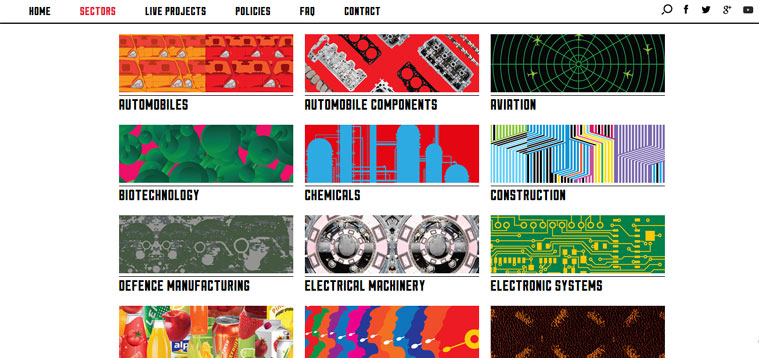
PM Narendra Modi first made the pitch for 'Make in India' during his maiden Independence Day speech from the ramparts of Red Fort "If we have to put in use the education, the capability of the youth, we will have to go for manufacturing sector and for this Hindustan also will have to lend its full strength, but we also invite world powers. Therefore I want to appeal all the people world over, from the ramparts of the Red Fort, “Come, make in India”, “Come, manufacture in India”. Sell in any country of the world but manufacture here. We have got skill, talent, discipline, and determination to do something. We want to give the world an favourable opportunity that come here, “Come, Make in India” and we will say to the world, from electrical to electronics, “Come, Make in India”, from automobiles to agro value addition “Come, Make in India”, paper or plastic, “Come, Make in India”, satellite or submarine “Come, Make in India”. Our country is powerful. Come, I am giving you an invitation. Brothers and sisters, I want to call upon the youth of the country, particularly the small people engaged in the industrial sector. I want to call upon the youth working in the field of technical education in the country. As I say to the world “Come, Make in India”, I say to the youth of the country – it should be our dream that this message reaches every corner of the world, “Made in India”. This should be our dream.
This is a path-breaking venture. In fact, the vision statement of official website, www.makeinindia.gov.in commits to achieve for the country among other things an increase in manufacturing sector growth to 12-14 % per annum over the medium term, increase in the share of manufacturing in the country’s Gross Domestic Product from 16% to 25% by 2022 and importantly to create 100 million additional jobs by 2022 in the manufacturing sector alone. These are quite highly ambitious targets given the background that the manufacturing sector in India, which accounts for fourth-fifth of the total output, grew a meagre 3.3 per cent in January 2010.
Achievable Targets:
· Target of an increase in manufacturing sector growth to 12-14% per annum over the medium term.
· An increase in the share of manufacturing in the country’s Gross Domestic Product from 16% to 25% by 2022.
· To create 100 million additional jobs by 2022 in manufacturing sector.
· Creation of appropriate skill sets among rural migrants and the urban poor for inclusive growth.
· An increase in domestic value addition and technological depth in manufacturing.
· Enhancing the global competitiveness of the Indian manufacturing sector.
· Ensuring sustainability of growth, particularly with regard to environment.
Tapping Golden Opportunity:
Now let us look at the opportunity, the initiative can actually benefit India from the ground reality, especially when the Chinese manufacturing leaps have come under strain. There are already reports that several western manufacturing players operating in China want to move away from the world’s largest manufacturing hub.
Analysts say, Chinese wages are going up and the labour market is getting more challenging and that is driving away investors. Thus companies with operating factories in China should look for other alternatives in the region, such as Vietnam, Indonesia and of course India.
What are the advantages Indian business and especially manufacturing sector actually offer?
The country is expected to rank amongst the world’s top three growth economies and amongst the top three manufacturing destinations by as early as 2020. This is far more ambitious scene than promised about 2050 sometime back in the context of India’s role at the BRICS level. Indian manufacturing sector has positive elements like “favourable demographic dividends” for the next 2-3 decades. The sustained availability of quality workforce is another advantage.
Importantly again, in India, the cost of manpower is relatively low as compared to other countries. There are responsible business houses operating with credibility and professionalism. The country has a democratized polity vis-à-vis the rule of law and a strong consumerism intake ability of the domestic market.
Various speakers on September 25 at the launch of Make in India programme also spoke about robust technical and engineering capabilities backed by top-notch scientific and technical institutes as other positive offerings on the table.
Favourable Milestones:
· India has already marked its presence as one of the fastest growing economies of the world.
· The country is expected to rank amongst the world’s top three growth economies and amongst the top three manufacturing destinations by 2020.
· Favourable demographic dividends for the next 2-3 decades. Sustained availability of quality workforce.
· The cost of manpower is relatively low as compared to other countries.
· Responsible business houses operating with credibility and professionalism.
· Strong consumerism in the domestic market.
· Strong technical and engineering capabilities backed by top-notch scientific and technical institutes.
· Well-regulated and stable financial markets open to foreign investors.
The government has also pledged other focused approaches. Among other things, it intends to leverage the existing incentives/schemes to boost manufacturing.
A technology acquisition and development fund has been proposed for the acquisition of appropriate technologies, the creation of a patent pool and the development of domestic manufacturing of equipment used for controlling pollution and reducing energy consumption, official sources said in New Delhi.
This fund will also function as an autonomous patent pool and licensing agency. It will purchase intellectual property rights from patent holders.
In his speech at the launch of the campaign, the Prime Minister Shri Modi had a vital point to make when he said incentives or tax-free announcements do not win over investors. It is obvious there’s need to create development and growth oriented environment.
The government has also to deal with an existing menace in bureaucratic functioning. The bureaucratic bottle necks that hinder ease of doing business need to be removed.
Training of Workforce:
The manufacturing sector cannot develop on its own without skilled labour force and in this context it is heartening to note the government’s initiatives for skill development. The creation of appropriate skill would definitely set rural migrants and the urban poor on a track towards inclusive growth. That would be a vital step for boosting manufacturing.
The New Ministry for Skill Development and Entrepreneurship has initiated the process of revising the National Policy on Skill Development. It is significant to note that under the Rural Development ministry, the Modi government has undertaken another new initiative for skill development under a recast programme named after BJP icon Pt. Deendayal Upadhyaya.
The new training programme envisages setting up of at least 1500 to 2000 training centres across the country and the entire project would result in an estimated expenditure of Rs 2000 crore and will be run on PPP model.
The new training programme would enable the youths to get jobs in demand-oriented markets like Spain, US, Japan, Russia, France, China, UK and West Asia. The government proposes to train about 3 lakh youths annually in first two years and by the end of 2017, it has set a target of reaching out to as many as 10 lakh rural youths.
Other steps:
As part of other steps, there is need to address other issues too like adequate development of basic infrastructures – the roads and the power chiefly. For long, MNCs and software service companies have relished doing business in India due to a robust market with enhanced purchasing ability of the citizens but in terms of building up ‘manufacturing facilities’, India has been a case of also-ran. In this context it is worth pointing out that a strong political will, business-like approach of bureaucrats and the entrepreneurs, skilled of workforce along with investment friendly policies can unleash the nation’s potential.
It is in this context the government’s efforts to develop an “industrial corridor” between Delhi and Mumbai needs to be appreciated.
The government is also working on multi-pronged strategies like development of infrastructure linkages including pioneer plants, assured water supply, high capacity transportation and logistics facilities.
Carrying on the good works on these fronts, the government also has begun the process of reviving five ailing Public Sector units (PSUs). Of the 11 PSUs, the government also feels that for six other units that needs to be closed, it is working on one-time settlement involving voluntary retirement scheme entailing a cost of Rs 1,000 crore VRS for employees.
The state-run units which have been identified by the government for revival include HMT Machine Tools Ltd; Heavy Engineering Corporation; NEPA Ltd; Nagaland Paper & Pulp Co Ltd; and Triveni Structurals.
Subscribe to:
Comments (Atom)
Featured post
UKPCS2012 FINAL RESULT SAMVEG IAS DEHRADUN
Heartfelt congratulations to all my dear student .this was outstanding performance .this was possible due to ...

-
On Saturday, Defence Minister Arun Jaitley took his best procurement decision so far, relating to building six state-of-the-art submarin...
-
YEAR END REVIEW- 2014 - Measures to Bring Industry and Manufacturing Centre-Stage for Economic Growth Marks 2014 In the ...
-
A fundamental feature of our political economy is the demand for social protection. Any government in this country will struggle to creat...
-
The Annual Report for the year 2013-14 has been released by AERB in accordance with its mandate to keep the public informed on safety iss...
-
India's tough diplomacy blocked a landmark world trade treaty late on Thursday, despite last-ditch talks to rescue what would have be...
-
The problems that confront higher education in India today are low rates of enrolment, unequal access, poor quality of infrastructure and...
-
In an important sense, the US economy is now at full employment. The relatively tight labour market is causing wages to rise at an acc...
-
Cabinet approves continuation and Restructuring of National Rural Drinking Water Programme The Union Cabinet chaired by the Prime M...
-
For the first time, India will allow nearly 15% of universities to offer online degrees allowing students and executives to learn anywhere...
-
प्रदेश में औद्योगीकरण को बढ़ावा देने के लिए Single-Window System लागू किया गया है। पूंजी निवेश को आकर्षित करने एवं इसे और कारगर बना...