The eligibility criteria laid down by the Government for grant of Maharatna, Navratna and Miniratna status to Central Public Sector Enterprises (CPSEs) are following:
Criteria for grant of Maharatna status :-
The CPSEs fulfilling the following criteria are eligible to be considered for grant of Maharatna status.
(i) Having Navratna status.
(ii) Listed on Indian stock exchange with minimum prescribed public shareholding under SEBI regulations.
(iii) Average annual turnover of more than Rs. 25,000 crore, during the last 3 years.
(iv) Average annual net worth of more than Rs. 15,000 crore, during the last 3 years.
(v) Average annual net profit after tax of more than Rs. 5,000 crore, during the last 3 years.
(vi) Should have significant global presence/international operations.
Criteria for grant of Navratna status :-
The Miniratna Category – I and Schedule ‘A’ CPSEs, which have obtained ‘excellent’ or ‘very good’ rating under the Memorandum of Understanding system in three of the last five years, and have composite score of 60 or above in the six selected performance parameters, namely,
(i) net profit to net worth,
(ii) manpower cost to total cost of production/services,
(iii) profit before depreciation, interest and taxes to capital employed,
(iv) profit before interest and taxes to turnover,
(v) earning per share and
(vi) inter-sectoral performance.
Criteria for grant of Miniratna status :-
The CPSEs which have made profits in the last three years continuously and have positive net worth are eligible to be considered for grant of Miniratna status.
Presently, there are 7 Maharatna, 16 Navratna and 71 Miniratna CPSEs.
|
21 July 2014
Eligibility Criteria for Grant of Maharatna, Navratna and Miniratna Status to CPSEs ,for IAS PRE

Site Clearance for Dholera Airport Project
Minister of State for Civil Aviation, Shri G.M. Siddeshwara informed the Lok Sabha today that the Government has accorded site clearance for the Greenfield international airport project at Dholera at Ahmedabad in Gujarat being developed by the Gujarat Infrastructure Development Board in 2014. Further, the Taj International Greenfield airport project proposed at Hirangoan, Firozabad, Uttar Pradesh is presently under the preliminary scrutiny of the Government.
AAI has recently upgraded Bhopal, Indore and Raipur airports to international standards and the Government has initiated the process of declaring these airports as international airports. Further, the Government of India has granted in-principle approval for development of the Greenfield airport projects as international airports with estimated project costs (approx.) as under:
State Airport Rs. in Crore)
Goa Mopa 3000
Kerala Kannur 1800
Maharashtra Navi Mumbai 14500
Maharashtra Shirdi 300
Uttar Pradesh Kushinagar 355
|
PM visits Bhabha Atomic Research Centre.
• Prime Minister asks Department of Atomic Energy to draw up a programme of year-long diamond jubilee celebrations. • Focus to be on the human and developmental dimensions of atomic science, with special outreach to the youth: PM |
The Prime Minister, Shri Narendra Modi, paid his first visit to Department of Atomic Energy (DAE) in Mumbai today. He was briefed by Dr. R.K. Sinha, Secretary, Department of Atomic Energy and other top officials and scientists at the Bhabha Atomic Research Centre on India's atomic energy programme; DAE's extensive research and development and education programmes; and DAE's contributions in other areas such as healthcare, especially cancer treatment, food security, solid waste management and water purification. Referring to the Diamond Jubilee of DAE, which falls on August 3, the Prime Minister asked Department of Atomic Energy to draw up a programme of year-long celebrations, with special focus on the various human and developmental dimensions of atomic science, with special outreach to the youth in schools and colleges throughout the country. The Prime Minister exhorted DAE to present the human face of India’s capabilities in nuclear science throughout the world. Prime Minister was apprised of the safety and security measures adopted by the DAE and India's excellent record in this regard. During the visit, which lasted four hours, Prime Minister was also shown some of DAE's most advanced facilities at BARC, including the Dhruva Research Reactor. Prime Minister expressed his strong appreciation for the extraordinary achievements of Indian scientific community in one of the most complex and challenging fields of science and technology. He said their success was especially creditable because it took place in the face of decades of international technology denial regime; India's self-reliance in the nuclear fuel cycle and the commercial success of the indigenous reactors demonstrated that with vision, resolve and hard work, India could be a front ranking country in the most challenging fields. Prime Minister reiterated his belief that energy security, which was increasingly based on clean and reliable sources of energy, was the critical driver of India's rapid and sustained long term development. He saw an essential role for nuclear energy in India's energy strategy, given the scale of demand in India. Prime Minister assured the DAE of his full support in the implementation of DAE's ambitious expansion programme and expressed hope that DAE would meet the target of increasing the capacity by three times from the present level of 5780 MW by 2023-24 within the projected cost. He underlined the importance of ensuring that nuclear energy remained commercially viable and competitive with other sources of clean energy in the long run. He also asked DAE to continually upgrade technology, both with regard to our long term plans and international trends. DAE, he said, must also plan for ensuring adequate availability of skilled human resources in the country. Prime Minister told DAE that nuclear safety and security were of the highest priority for him and asked DAE to ensure that India's standards and practices were the most advanced in the world. He also asked DAE to pay special attention to the local communities in planning and implementing nuclear power projects. He hoped that role of industry in providing equipment and systems for the nuclear programme would continue to grow and recognized that adequate incentive structure should be exist to facilitate that. He noted that we would need to tap additional sources of investments for our ambitious expansion programme. He welcomed India's growing international partnership in the nuclear energy and hoped for timely implementation of the ongoing projects in a manner that they met the requirements of techno-economic viability and safety standards. Technology transfer to India, he observed, was a vital element of his vision for international partnership in India. Prime Minister lauded the contribution of DAE scientists in the critical area of cancer research and treatment through the Tata Memorial Hospital. He hoped that DAE would soon implement the planned projects in Chandigarh and Vishakapatnam and would take one of the most advanced standards of cancer treatment in Asia to other parts of India. He also directed DAE to make special efforts to expand its research and extension on a national scale applications of atomic science in areas like healthcare, waste management, water treatment, agriculture and food preservation. Prime Minister congratulated DAE on the important milestone of Diamond Jubilee and wished the DAE community continued success in the future. The National Security Advisor, Shri Ajit Doval, the Director, BARC and the Secretary AERC, Joint Secretary in the PMO, Shri Javed Ashraf, and Private Secretaries to the PM, Shri Vikram Misri and Shri Sanjiv Singla were also present. |
MARKS OF SELECTED CANDIDATE IN IAS-2013
http://upsc.gov.in/exams/marks/2013/csm2013/CS_M_2013_RECOMMENDED.pdf
Cleaning of River Ganga and Yamuna
| Water and Sanitation are the State subjects, and the major sources of pollution in rivers fall under the responsibilities of local and state authorities. The Central Government is at best supplementing the efforts of the State Governments/local bodies by providing Central assistance for pollution abatement. Ministry of Environment and Forests have informed that for river Ganga, National Ganga River Basin Authority (NGRBA) has been setup in 2009 under the Chairmanship of the Prime Minister. The implementing agency for NGRBA is National Mission on Clean Ganga (NMCG). National River Conservation Directorate (NRCD) is entrusted with pollution control and conservation/ development of river Yamuna, and other non-Ganga rivers. Further, the concerned State Pollution Control Boards are responsible to control and monitor industrial pollution in order to ensure that untreated industrial effluents are not discharged into the rivers, thereby polluting them. Since inception of the National Ganga River Basin Authority (NGRBA) programme, 76 schemes (70 infrastructure investment, 5 institutional development and 1 implementation support) in 48 towns in Ganga States have been sanctioned at a total cost of Rs. 5004.19 crore. Against this, Rs. 1229.87 crore has been released by the Centre including the matching share of the States so far and a total expenditure of Rs. 838.76 crore has been incurred till March, 2014 for implementation of the projects. A Memorandum of Agreement (MoA) for 10 years has been signed in 2010 by MoEF& the consortium of 7 IITs for preparation of a comprehensive River Basin Management Plan for Ganga (GRBMP). Besides the IITs, National Institute of Hydrology (NIH), Roorkee under MoWR, BHU, various universities and research institutes are also involved in GRBMP. Interim report has been submitted, which is circulated to different ministries, departments and other stakeholders for comments. It is expected plan may be drawn by December 2014 with consultation of stake holders. Further, Government is giving special impetus on rejuvenation of River Ganga. Consultation with different stakeholders viz., Ministries such as Ministry of Environment & Forests; Water Resources, Ganga Rejuvenation and River Development; Urban Development; Tourism; Shipping; Drinking Water Supply and Sanitation; Rural Development, etc., as well as academics, technical experts and NGOs associated with cleaning of Ganga, is in progress. Crystallisation of action plan, including framing of its salient features, including time line would be known only after the finalisation of the action plan for cleaning of River Ganga. Central Pollution Control Board is monitoring the levels of Arsenic and Fluoride in ground water. However, no specific information is available in this Ministry regarding high level of arsenic and fluoride in water of rivers Ganga and Yamuna. |
NASA celebrates 45 years of moon landing
On July 20, 1969, Apollo 11 astronauts Neil Armstrong and Buzz Aldrin became the first humans to set foot on the moon.
Forty-five years later, NASA will celebrate on Monday the giant leap by honouring Armstrong, who died in 2012, with a renaming ceremony of the historic “operations and checkout building” at Cape Canaveral in Florida, the launch site.
Both Aldrin and Michael Collins, the Apollo 11 command module pilot who orbited the moon, will be there.
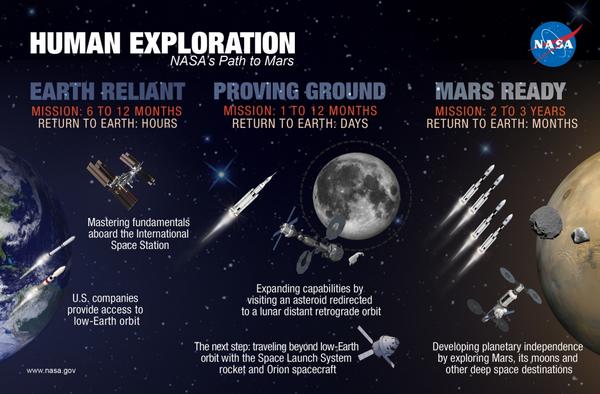
“It was 45 years ago that Neil Armstrong took the small step onto the surface of the moon that changed the course of history. The years that followed saw a space age of scientific, technological and human research on which we have built the modern era,” NASA said in a statement.To send humans to deep space, NASA engineers are developing a new space transportation capability destined to travel far beyond Earth.
The Orion spacecraft and Space Launch System (SLS) heavy-lift rocket will be the most advanced space vehicles ever built.
“Around 2019, we will launch a robotic mission to rendezvous with a near-Earth asteroid. The spacecraft will either capture an asteroid or retrieve a boulder off of a much larger asteroid and then redirect the asteroid mass to a stable orbit around the moon,” the U.S. space agency said.
In the mid 2020s, astronauts aboard the Orion spacecraft, launched by SLS, will explore that asteroid and return to Earth with samples.
In December 2014, NASA is set to conduct the first test flight of Orion.
In 2015, the “New Horizons” mission will fly by Pluto and see the icy world up close for the first time.
“In 2020, we will send a new rover to Mars, to follow in the footsteps of Curiosity, search for evidence of life and pave the way for future human explorers,” NASA announced.
Move over, big brother
The western media has been dismissive of the BRICS move to set up a bank, but such cynicism misses the larger picture — the end of western hegemony and the rise of the multiplex world
For the first time since its creation in the aftermath of World War II, the structure of global economic governance established and dominated by the United States has some serious competition. At their summit in Brazil on July 15, 2014, the five BRICS countries (Brazil, Russia, India, China and South Africa) agreed to set up the New Development Bank with a capitalisation of U.S. $100 billion) and a contingency fund to deal with financial crises.
It is too early to say whether these mechanisms will challenge the role of the International Bank for Reconstruction and Development (IBRD) or the World Bank and the International Monetary Fund (IMF), which have been the bedrock of the Bretton Woods system under U.S. hegemony. But they at least serve as a reminder that the era of Western and American dominance of the world is ending, giving way to a more complex and diversified world order: the multiplex world. The move by BRICS, though outwardly economic in nature, has serious geopolitical undertones.
It comes after a speech last May to the U.S. Military Academy in West Point by U.S. President Barack Obama in which he declared: “America must always lead on the world stage. If we don’t, no one else will.” Such remarks would seem arrogant and dismissive of the ambitions of the emerging powers. The BRICS nations do not accept the view that the world is for America’s alone to lead or manage. The BRICS summit in Brazil also showed that the emerging powers do not buy the Obama administration’s move to punish Russia for its actions in Ukraine by isolating it internationally.
Domination from the West
To compound matters, recent developments, including the deterioration of U.S.-Russian relations over Ukraine and U.S.-China relations over East Asian maritime disputes casts a shadow over cooperation among the major powers in advancing global governance. One potential victim could be the G-20. Created in 1999 in response to the Asian financial crisis, G-20 was upgraded to a summit-level conclave of established and emerging nations in 2008, to manage the unfolding global financial crisis. Representing 80 per cent of the world’s population, 90 per cent of the world’s GDP, 90 per cent of the world’s finance, and 80 per cent of the world’s trade, this institution describes itself (at its Pittsburg Summit in September 2009) as the “world’s premier forum for international economic cooperation.” There is little doubt that it is vital to the future of global governance. Javier Solana, the former NATO and EU foreign policy chief, has called the G20, “the only forum in which world powers and emerging countries sit as equals at the same table.”
To compound matters, recent developments, including the deterioration of U.S.-Russian relations over Ukraine and U.S.-China relations over East Asian maritime disputes casts a shadow over cooperation among the major powers in advancing global governance. One potential victim could be the G-20. Created in 1999 in response to the Asian financial crisis, G-20 was upgraded to a summit-level conclave of established and emerging nations in 2008, to manage the unfolding global financial crisis. Representing 80 per cent of the world’s population, 90 per cent of the world’s GDP, 90 per cent of the world’s finance, and 80 per cent of the world’s trade, this institution describes itself (at its Pittsburg Summit in September 2009) as the “world’s premier forum for international economic cooperation.” There is little doubt that it is vital to the future of global governance. Javier Solana, the former NATO and EU foreign policy chief, has called the G20, “the only forum in which world powers and emerging countries sit as equals at the same table.”
 The move by BRICS, though outwardly economic in nature, has serious geopolitical undertones
G-20 is already viewed by the emerging powers as being dominated by the West, with too many European members and not enough representation from the developing world. And its efforts to reform the global institutions have lost momentum. This gives an added significance to the BRICS bank and fund set up in Brazil.
Hardened attitude
In the meantime, the U.S. attitude towards the emerging powers seems to have hardened. In 2010, the U.S. Secretary of State, Hillary Clinton, expressed the determination of the U.S. “to deepen engagement with these emerging centres of influence.” As she put it, “American leadership does not mean we do everything ourselves. We contribute our share, often the largest share, but we also have high expectations of the governments and peoples we work with.”
In the meantime, the U.S. attitude towards the emerging powers seems to have hardened. In 2010, the U.S. Secretary of State, Hillary Clinton, expressed the determination of the U.S. “to deepen engagement with these emerging centres of influence.” As she put it, “American leadership does not mean we do everything ourselves. We contribute our share, often the largest share, but we also have high expectations of the governments and peoples we work with.”
But in a speech delivered on June 11, 2014, closely following Mr. Obama’s “America must always lead” doctrine at West Point, U.S. National Security Adviser Susan Rice declared: “With emerging powers we must be able to collaborate where our interests converge but define our differences and defend our interests where they diverge.”
With relations with two of the BRICS countries — Russia and China — under serious strain over Ukraine and maritime disputes in East and Southeast Asia respectively, Washington’s commitment and ability to develop a shared leadership structure that Ms. Clinton had envisaged looks increasingly doubtful, if not altogether impossible. In this context, the mainstream western media has been too dismissive of the latest move by BRICS to set up a bank and contingency fund. But such cynicism misses the larger picture, which is the end of western hegemony and the rise of the multiplex world. A better response from the U.S. and the West would be to speed up the reform of the IMF and the World Bank so that they accommodate the rising clout of the emerging powers.
Subscribe to:
Comments (Atom)
Featured post
UKPCS2012 FINAL RESULT SAMVEG IAS DEHRADUN
Heartfelt congratulations to all my dear student .this was outstanding performance .this was possible due to ...
