http://upsc.gov.in/exams/marks/2013/csm2013/CS_M_2013_RECOMMENDED.pdf
21 July 2014

Cleaning of River Ganga and Yamuna
| Water and Sanitation are the State subjects, and the major sources of pollution in rivers fall under the responsibilities of local and state authorities. The Central Government is at best supplementing the efforts of the State Governments/local bodies by providing Central assistance for pollution abatement. Ministry of Environment and Forests have informed that for river Ganga, National Ganga River Basin Authority (NGRBA) has been setup in 2009 under the Chairmanship of the Prime Minister. The implementing agency for NGRBA is National Mission on Clean Ganga (NMCG). National River Conservation Directorate (NRCD) is entrusted with pollution control and conservation/ development of river Yamuna, and other non-Ganga rivers. Further, the concerned State Pollution Control Boards are responsible to control and monitor industrial pollution in order to ensure that untreated industrial effluents are not discharged into the rivers, thereby polluting them. Since inception of the National Ganga River Basin Authority (NGRBA) programme, 76 schemes (70 infrastructure investment, 5 institutional development and 1 implementation support) in 48 towns in Ganga States have been sanctioned at a total cost of Rs. 5004.19 crore. Against this, Rs. 1229.87 crore has been released by the Centre including the matching share of the States so far and a total expenditure of Rs. 838.76 crore has been incurred till March, 2014 for implementation of the projects. A Memorandum of Agreement (MoA) for 10 years has been signed in 2010 by MoEF& the consortium of 7 IITs for preparation of a comprehensive River Basin Management Plan for Ganga (GRBMP). Besides the IITs, National Institute of Hydrology (NIH), Roorkee under MoWR, BHU, various universities and research institutes are also involved in GRBMP. Interim report has been submitted, which is circulated to different ministries, departments and other stakeholders for comments. It is expected plan may be drawn by December 2014 with consultation of stake holders. Further, Government is giving special impetus on rejuvenation of River Ganga. Consultation with different stakeholders viz., Ministries such as Ministry of Environment & Forests; Water Resources, Ganga Rejuvenation and River Development; Urban Development; Tourism; Shipping; Drinking Water Supply and Sanitation; Rural Development, etc., as well as academics, technical experts and NGOs associated with cleaning of Ganga, is in progress. Crystallisation of action plan, including framing of its salient features, including time line would be known only after the finalisation of the action plan for cleaning of River Ganga. Central Pollution Control Board is monitoring the levels of Arsenic and Fluoride in ground water. However, no specific information is available in this Ministry regarding high level of arsenic and fluoride in water of rivers Ganga and Yamuna. |
NASA celebrates 45 years of moon landing
On July 20, 1969, Apollo 11 astronauts Neil Armstrong and Buzz Aldrin became the first humans to set foot on the moon.
Forty-five years later, NASA will celebrate on Monday the giant leap by honouring Armstrong, who died in 2012, with a renaming ceremony of the historic “operations and checkout building” at Cape Canaveral in Florida, the launch site.
Both Aldrin and Michael Collins, the Apollo 11 command module pilot who orbited the moon, will be there.
“It was 45 years ago that Neil Armstrong took the small step onto the surface of the moon that changed the course of history. The years that followed saw a space age of scientific, technological and human research on which we have built the modern era,” NASA said in a statement.To send humans to deep space, NASA engineers are developing a new space transportation capability destined to travel far beyond Earth.
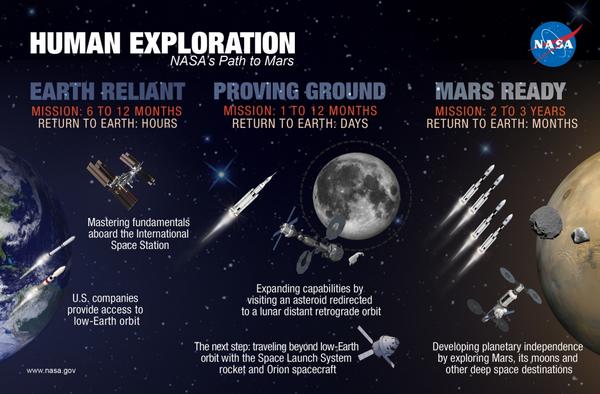
The Orion spacecraft and Space Launch System (SLS) heavy-lift rocket will be the most advanced space vehicles ever built.
“Around 2019, we will launch a robotic mission to rendezvous with a near-Earth asteroid. The spacecraft will either capture an asteroid or retrieve a boulder off of a much larger asteroid and then redirect the asteroid mass to a stable orbit around the moon,” the U.S. space agency said.
In the mid 2020s, astronauts aboard the Orion spacecraft, launched by SLS, will explore that asteroid and return to Earth with samples.
In December 2014, NASA is set to conduct the first test flight of Orion.
In 2015, the “New Horizons” mission will fly by Pluto and see the icy world up close for the first time.
“In 2020, we will send a new rover to Mars, to follow in the footsteps of Curiosity, search for evidence of life and pave the way for future human explorers,” NASA announced.
Move over, big brother
The western media has been dismissive of the BRICS move to set up a bank, but such cynicism misses the larger picture — the end of western hegemony and the rise of the multiplex world
For the first time since its creation in the aftermath of World War II, the structure of global economic governance established and dominated by the United States has some serious competition. At their summit in Brazil on July 15, 2014, the five BRICS countries (Brazil, Russia, India, China and South Africa) agreed to set up the New Development Bank with a capitalisation of U.S. $100 billion) and a contingency fund to deal with financial crises.
It is too early to say whether these mechanisms will challenge the role of the International Bank for Reconstruction and Development (IBRD) or the World Bank and the International Monetary Fund (IMF), which have been the bedrock of the Bretton Woods system under U.S. hegemony. But they at least serve as a reminder that the era of Western and American dominance of the world is ending, giving way to a more complex and diversified world order: the multiplex world. The move by BRICS, though outwardly economic in nature, has serious geopolitical undertones.
It comes after a speech last May to the U.S. Military Academy in West Point by U.S. President Barack Obama in which he declared: “America must always lead on the world stage. If we don’t, no one else will.” Such remarks would seem arrogant and dismissive of the ambitions of the emerging powers. The BRICS nations do not accept the view that the world is for America’s alone to lead or manage. The BRICS summit in Brazil also showed that the emerging powers do not buy the Obama administration’s move to punish Russia for its actions in Ukraine by isolating it internationally.
Domination from the West
To compound matters, recent developments, including the deterioration of U.S.-Russian relations over Ukraine and U.S.-China relations over East Asian maritime disputes casts a shadow over cooperation among the major powers in advancing global governance. One potential victim could be the G-20. Created in 1999 in response to the Asian financial crisis, G-20 was upgraded to a summit-level conclave of established and emerging nations in 2008, to manage the unfolding global financial crisis. Representing 80 per cent of the world’s population, 90 per cent of the world’s GDP, 90 per cent of the world’s finance, and 80 per cent of the world’s trade, this institution describes itself (at its Pittsburg Summit in September 2009) as the “world’s premier forum for international economic cooperation.” There is little doubt that it is vital to the future of global governance. Javier Solana, the former NATO and EU foreign policy chief, has called the G20, “the only forum in which world powers and emerging countries sit as equals at the same table.”
To compound matters, recent developments, including the deterioration of U.S.-Russian relations over Ukraine and U.S.-China relations over East Asian maritime disputes casts a shadow over cooperation among the major powers in advancing global governance. One potential victim could be the G-20. Created in 1999 in response to the Asian financial crisis, G-20 was upgraded to a summit-level conclave of established and emerging nations in 2008, to manage the unfolding global financial crisis. Representing 80 per cent of the world’s population, 90 per cent of the world’s GDP, 90 per cent of the world’s finance, and 80 per cent of the world’s trade, this institution describes itself (at its Pittsburg Summit in September 2009) as the “world’s premier forum for international economic cooperation.” There is little doubt that it is vital to the future of global governance. Javier Solana, the former NATO and EU foreign policy chief, has called the G20, “the only forum in which world powers and emerging countries sit as equals at the same table.”
 The move by BRICS, though outwardly economic in nature, has serious geopolitical undertones
G-20 is already viewed by the emerging powers as being dominated by the West, with too many European members and not enough representation from the developing world. And its efforts to reform the global institutions have lost momentum. This gives an added significance to the BRICS bank and fund set up in Brazil.
Hardened attitude
In the meantime, the U.S. attitude towards the emerging powers seems to have hardened. In 2010, the U.S. Secretary of State, Hillary Clinton, expressed the determination of the U.S. “to deepen engagement with these emerging centres of influence.” As she put it, “American leadership does not mean we do everything ourselves. We contribute our share, often the largest share, but we also have high expectations of the governments and peoples we work with.”
In the meantime, the U.S. attitude towards the emerging powers seems to have hardened. In 2010, the U.S. Secretary of State, Hillary Clinton, expressed the determination of the U.S. “to deepen engagement with these emerging centres of influence.” As she put it, “American leadership does not mean we do everything ourselves. We contribute our share, often the largest share, but we also have high expectations of the governments and peoples we work with.”
But in a speech delivered on June 11, 2014, closely following Mr. Obama’s “America must always lead” doctrine at West Point, U.S. National Security Adviser Susan Rice declared: “With emerging powers we must be able to collaborate where our interests converge but define our differences and defend our interests where they diverge.”
With relations with two of the BRICS countries — Russia and China — under serious strain over Ukraine and maritime disputes in East and Southeast Asia respectively, Washington’s commitment and ability to develop a shared leadership structure that Ms. Clinton had envisaged looks increasingly doubtful, if not altogether impossible. In this context, the mainstream western media has been too dismissive of the latest move by BRICS to set up a bank and contingency fund. But such cynicism misses the larger picture, which is the end of western hegemony and the rise of the multiplex world. A better response from the U.S. and the West would be to speed up the reform of the IMF and the World Bank so that they accommodate the rising clout of the emerging powers.
A new index to measure social progress
Even as India commits itself to move on the fast track of economic growth, it must be mindful of the need to invest in improving its social indicators as well
Is Gross Domestic Product (GDP) an adequate measure of a country’s development across many dimensions? This has been debated vigorously in recent years. The discontent with GDP stems from the fact that it focusses exclusively on economic growth. Even there, it does not capture the level of inequity which can exist in a society despite overall economic growth. The inequity can in fact even be exacerbated by it. More importantly, it pays no attention to the social and environmental measures of development which are as important as economic development. Indeed, the United Nations has identified three pillars on which the post- 2015 Sustainable Development Goals (SDGs) must rest: economic, social and environmental.
Alternate measures
Several alternative measures have been proposed to capture the social dimension of development, combined with or independent of economic indices. Bhutan has embraced and espoused the concept of Gross National Happiness. A World Happiness Report is now periodically published from the Columbia University which compares self-reported levels of happiness of people from different countries. A composite Wellness Index was proposed by noted economists Stiglitz, Sen and Fitoussi in response to a request from the then President of France, Nicolas Sarkozy, for a measure of development that looks beyond GDP. A Global Multidimensional Poverty Index was developed at Oxford to gauge inequity within and across societies.
Several alternative measures have been proposed to capture the social dimension of development, combined with or independent of economic indices. Bhutan has embraced and espoused the concept of Gross National Happiness. A World Happiness Report is now periodically published from the Columbia University which compares self-reported levels of happiness of people from different countries. A composite Wellness Index was proposed by noted economists Stiglitz, Sen and Fitoussi in response to a request from the then President of France, Nicolas Sarkozy, for a measure of development that looks beyond GDP. A Global Multidimensional Poverty Index was developed at Oxford to gauge inequity within and across societies.
We may continue to measure GDP, but we must also measure social progress lest we end up as a soulless society characterised by gaping equality
However, none of these has really caught on because economists, industrialists and politicians alike are conditioned to place a high premium on economic development as the measure of progress and do not like to see the clarity of a single measure like GDP cluttered by a host of other indicators they view as imprecise or even irrelevant. So, an index of social progress is needed which does not try to displace GDP (not yet anyway) but has additive value. Such an index can be used to remind political leaders that their bifocal vision must accommodate both economic and social progress as being important for a country, recognising, of course, that these two tracks are closely interlinked and sometimes inseparable.
Such an index of social progress has recently been created by a group of academics and institutions constituting the Social Progress Imperative (www.socialprogressimperative.org). This index has three major domains: Basic Human Needs, Foundations of Wellbeing and Opportunity. Each of these has several clusters of specific indicators (as shown in the table).
The environmental dimension is partly incorporated into the Social Progress Index (SPI) as a cluster of indicators related to ecosystem sustainability. While there can be debates on which other indicators could have been included in any of the clusters, the SPI does provide a list of key areas which need to be tracked and acted upon to ensure a higher level of social progress. The index is still evolving, with validation studies being conducted on data from different countries. The authors have extended an open invitation to groups from anywhere in the world to use their data sets for validation and suggest refinements.
The designers of this index draw our attention to three overarching findings of their study so far: social progress is distinct from economic development, though correlated with it; some aspects of social progress are more closely related to the level of economic development than others; countries have relative strengths and weaknesses in social progress, both across the major dimensions and across components within the dimensions.
Of the three domains, Basic Human Needs is best correlated with per capita GDP, Foundations of Wellbeing being intermediate and Opportunity the least so. However, in each domain there is variability in the degree of correlation between the individual components and per capita GDP. As the developers of SPI affirm, the index offers a new tool to explore the complex two-way relationship between economic and social progress. At the same time, it provides a metric for comparison of countries, and States within a country.
Inter-country comparisons
In inter-country comparisons, the top three countries were New Zealand, Switzerland and Iceland. Not surprisingly, Netherlands, Norway, Sweden, Finland and Denmark feature in the top 10. India scored lower than the other four from the BRICS group because of lags in areas such as water, sanitation and access to higher education. In specific indicators, there is variability across these countries. For example, China lags in personal rights and Brazil in personal safety. Costa Rica has an SPI close to that of far richer countries like Spain and Italy. Costa Rica’s outstanding health status and access to education may be related to investment priorities (it has no defence budget) and social harmony. For the present, India need not concern itself with comparisons with other countries or even debate on how accurately the individual components of the index measure social progress. It would help if the SPI indicators serve as a checklist to monitor our progress over time in each of these important areas of human welfare.
In inter-country comparisons, the top three countries were New Zealand, Switzerland and Iceland. Not surprisingly, Netherlands, Norway, Sweden, Finland and Denmark feature in the top 10. India scored lower than the other four from the BRICS group because of lags in areas such as water, sanitation and access to higher education. In specific indicators, there is variability across these countries. For example, China lags in personal rights and Brazil in personal safety. Costa Rica has an SPI close to that of far richer countries like Spain and Italy. Costa Rica’s outstanding health status and access to education may be related to investment priorities (it has no defence budget) and social harmony. For the present, India need not concern itself with comparisons with other countries or even debate on how accurately the individual components of the index measure social progress. It would help if the SPI indicators serve as a checklist to monitor our progress over time in each of these important areas of human welfare.
Even as the country commits itself to move on the fast track of economic growth, it must be mindful of the need to invest in improving the social indicators as well. We may continue to measure GDP if that is still considered the talisman of economic progress by the worlds of politics and finance, but we must also simultaneously measure social progress lest we end up as a soulless society characterised by gaping inequality and glaring social backwardness despite gaining wealth. Let GDP and SPI be the inseparable Gemini twins that herald our ascent to higher levels of balanced development
Trials and regulations
The promise and performance of genetically modified crops in agriculture is once again under the spotlight, with the sanction given by the Genetic Engineering Approval Committee for confined field trials of several food crops. In its last days, the UPA government decided to end the moratorium on trial cultivation of these engineered varieties, and to allow experiments aimed at generating biosafety data. The GEAC has now taken further steps to allow field trials of rice, brinjal, mustard, chickpea and cotton, and import of GM soyabean oil. Clearly, there can be no credible argument against scientific experiments in agriculture that advance the goal of developing plant varieties that can withstand drought, resist pests and raise yields to feed the growing world population. But this should be done through a transparent regulatory process that is free of ethical conflicts. Proponents of GM crops funding research in agricultural universities represents one such conflict. To aid transparency, research findings should be made available in the public domain for independent study. But India has taken only halting steps towards establishing a strong regulatory system; the Biotechnology Regulatory Authority of India Bill, 2013, which provided for multi-level scientific assessments and an appellate tribunal, has lapsed.
While the Central government has not permitted the commercial cultivation of Bt brinjal in India, the recent case of neighbouring Bangladesh shows that regulatory mechanisms must be put in place before such crops are grown, whether for research or for the market — and they must be functional. Although the licence to produce the crop in Bangladesh required that the GM variety be isolated from indigenous ones to prevent genetic contamination, the condition was not followed. Field trials in India, in which the State governments have a say, must ensure that there are sufficient safeguards against such violations. If GM food is allowed to be sold to consumers, they must have the right to know what they are buying, and labelling should be made mandatory. Here again, the Bangladesh experience shows that such a condition may be difficult to enforce. There is no consensus on the performance of GM crops and the results have been mixed. They have had some beneficial impact on tillage practices and in terms of curbing the use of insecticides, but as the Union of Concerned Scientists in the U.S. points out, they have created monocultures and may be affecting birds and bees. All this underscores the need for a cautious approach — one that fosters scientific inquiry, allows for scrutiny and is underpinned by regulation. Enacting a comprehensive law that covers all aspects of GM crops should be a priority.
20 July 2014
Speech by the President of India, Shri Pranab Mukherjee at the inauguration of the Golden Jubilee of National Institute of Technology (NIT)
| 1. It is my privilege to be here today for the inauguration of the Golden Jubilee celebrations of National Institute of Technology (NIT), Tiruchirappalli. I congratulate everyone associated with this premier centre of technical education on this beautiful occasion. 2. I am also glad to have made use of this opportunity to visit Tiruchirappalli, which is a historical city famous for engineering marvels. The Grand Anicut, or the Kallanai dam, built across the Kaveri River by the Chola King, Karikala Chola, in the Second Century AD, is considered the oldest water regulatory structure in the world. The temple complex at Tanjavur is one of the largest in the country - its apex, the Kumbam, carved out of a single granite rock weighing 90 tonne is another engineering feat. Traditional idol-making at Swamimalai, which developed two thousand years ago, is the basis for investment casting technology, now adopted for advanced gas turbine engines. Tiruchirappalli is a bustling industrial destination today, marked by the presence of important engineering establishments like Bharat Heavy Electricals Limited, Ordnance Factory, mechanical workshop of the Indian Railways and number of ancillary industries. Ladies and Gentlemen: 3. NIT Tiruchirappalli is one of the top technical schools and one of the largest suppliers of engineers in our country. Formerly called Regional Engineering College, it was started in 1964. Its first Principal, Professor P.S. Manisundaram, was a visionary who nurtured this College from scratch. Tracing the origins of the older NITs like yours, one can draw a parallel with the genesis of post-1947 modern industrial India, when steel plants, refineries, dams and heavy engineering industries were being set up. Most of these NITs were established in rural locations or in green-field industrial sites, with the aim to spur local development. Your Institute, which was set up alongside BHEL, was one of them. Such vision brought about a pulsating eco-system of industry and technical institution that fostered close interaction. The NITs have made remarkable progress over the years. That their growth since inception is primarily the result of indigenous efforts, without help from foreign institutions, is truly praiseworthy. 4. Another notable feature of the NIT system is its student mix, which by design has a national character, making each campus a microcosmic-Bharat. The bright young minds – the would-be engineers and scientists - are an asset to the nation. Hopes and expectations from them are many. I am confident that the students, including those of this institute, will understand their responsibilities well. They will always, with a sense of obligation, perform their duty for the well-being of their fellow countrymen and development of the nation. Ladies and Gentlemen: 5. The IITs and NITs are the front-ranking institutions for engineering education in India. Yet, according to prominent international surveys on universities, Indian institutions do not figure in the top two hundred places. Since September 2012, I have been expressing my worry about our performance and restating in all my interactions with higher educational institutions the need to take the rating process seriously. It is therefore encouraging to see international rating agencies starting to recognize the quality of our institutes. Some of our IITs are in the top 50 in civil and electrical engineering. Five institutions are amongst the top 20 universities amongst BRICS nations. The number of Indian institutions in the top 100 in Asia has increased to 10 this year from 3 in 2013. I am confident that our institutes would replicate these initial successes in the overall rankings. The NITs, in particular your Institute, should take a cue from successful Indian institutions on how to approach the rating system. Featuring in international rankings has several positive spin-offs, in terms of intangibles like boosting the spirits of students and faculty, to more tangible benefits like better placement for students. More importantly, active participation in rankings will propel the development of institutions in the right direction. 6. India has recently become a permanent member of the Washington Accord, which is an international accreditation agreement amongst 17 countries for professional engineering degrees. I appreciate the efforts of all involved, including this Institute, in taking India into this privileged academic group. India’s entry will enable global recognition of our degrees and increase the mobility of our engineers. It will enjoin our technical schools to adhere to global benchmarks in quality. This will be the real test. 7. To identify the challenges facing NITs and work out strategies, a Conference of the Directors of NITs was organized in Rashtrapati Bhavan last year. I am hopeful of the suggestions made at the Conference being implemented in a time-bound manner. To address faculty shortage, vacant faculty positions must be filled up on priority and external talent injected by hiring experts from industry, laboratories and foreign universities on short-term basis. Academic curricula must have an industry-focus. Industry interface cell must be set up to establish linkages with the local industry and industry associations. 8. ICT networks must be utilized fully to enable knowledge sharing and intellectual collaboration beyond the campus. Academic cooperation is a must for healthy exchange of ideas and expansion of knowledge boundaries. It is heartening to note NIT Tiruchirappalli having active collaboration with leading global universities that augurs well for students’ prospects. 9. Augmentation of student capacity must be facilitated by quick up-gradation of infrastructure. E-classrooms must be made available for smarter dissemination of lectures and tutorials. I am told that NIT Tiruchirappalli is working on the concept of virtual campus, which if executed will enable greater access to better quality education. Ladies and Gentlemen: 10. Knowledge and innovation are the underpinning of progress and prosperity in the twenty-first century. In this age of globalization, we can derive competitive advantage only from an eco-system that is conducive to new learning, research and innovation. NITs must work towards promoting scientific temper in their students. I am glad to learn that this Institute has set up centres of excellence in emerging areas like corrosion and surface engineering, safety, health, energy and environment. 11. Using innovation as a bridge, we must muster enough technological prowess to be counted as an advanced nation. Yet, given the present socio-economic condition of our country, the thrust of research must be to erase backwardness and wipe out deprivation. Innovations must improve the state of the underserved, who want a positive difference in their lives. Institutions like yours must support ingenuous ideas that promise betterment for those aspiring to rise up the socio-economic ladder – help a farmer till the soil better, an artisan perfect his craft or a small entrepreneur improve the productivity of his venture. I am happy to note that this Institute has a Centre for Rural Technology aimed at developing modern and cost effective technologies for application in the rural areas. 12. We pin our hopes on IITs, NITs and other technical institutions to nurture world-class, professionally-competent engineers who will not only take India to new heights in technology but also improve the quality of life of our countrymen. We must, therefore, develop in our budding engineers an understanding of the society. I am pleased to know that students of this Institute are being exposed to the world outside through initiatives like Joy of Giving that provide service to orphanages and the needy. Always remember the words of wisdom of Swami Vivekananda, which I quote: “The education which does not help the common mass of people to equip themselves for the struggle of life, which does not bring out the strength of character, a spirit of philanthropy, and the courage of a lion -- is it worth the name?” (unquote). |
Subscribe to:
Posts (Atom)
Featured post
UKPCS2012 FINAL RESULT SAMVEG IAS DEHRADUN
Heartfelt congratulations to all my dear student .this was outstanding performance .this was possible due to ...

-
 Uttarakhand (UK) Forest Ranger Officer (FRO) exam 2016 Paper and solution by SAMVEG IAS Dear candidate we have provided solutio...
 -
Building on India’s family planning success Empowering women to make reproductive choices is the best way to address fertility, and its as...
-
Ills of too much transparency In as much as we gain as we improve the transparency of decisions in organizations and society, we should...
-
For the first time, India will allow nearly 15% of universities to offer online degrees allowing students and executives to learn anywhere...
-
Finance Minister Shri Arun Jaitley Presented Economic Survey 2016-17 in the Parliament today Economic Survey says economic growth to r...
-
प्रदेश में औद्योगीकरण को बढ़ावा देने के लिए Single-Window System लागू किया गया है। पूंजी निवेश को आकर्षित करने एवं इसे और कारगर बना...
-
Growing forests: on expanding good green cover A scientific national plan to expand good green cover is absolutely essential The discl...
-
As per Sample Registration System (SRS), 2013 reports published by Registrar General of India the Infant Mortality Rate (IMR) of India ...
-
Ensuring privacy in a digital age Citizens are unaware of how their personally identifiable information is collected, stored, used and s...
-
Let us be realistic about the UNSC recent victory in the hotly contested election to the International Court of Justice seems to have lift...
